
Mustard Greens are not always at the top of most gardeners list but they should be. Mustard Greens are rich in potassium, fiber, protein, magnesium, calcium, iron and vitamins A, C, and B6. All of these things are important for a healthy diet and mustard greens are a great provider of them. Mustard Greens are similar to Kale and Collard Greens, but aren’t quite as tolerate of frosts as they are. Paired with Pansies, Mustard Greens can bring some much needed color to the garden. Mustard Greens can be simmered to perfection or picked young for salads and sandwiches.
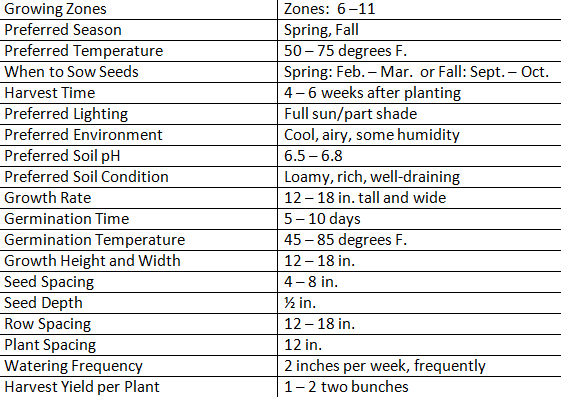
Mustard Greens prefer sun and are fast growers in the perfect location. Some shade in the afternoons is welcomed. Enriched soil, that is full of nutrients and compost, is an ideal start. For a spring crop, plant your seeds indoors a month before your expected last frost date. For fall crops, plant seeds outdoors when temperatures drop lower than 85 degrees F. during the day; about 4 – 6 weeks before your first expected frost.
When the seedlings are ready for transplanting, move them apart in small clumps, carefully handling their roots. They are tender. Separate the plants about a foot apart from each other, when they are a few inches tall with a good set of start leaves. A straw mulch cover will help keep the plants at the right temperature and moisture level. After about a month to a month and a half, your mustard greens will be ready to harvest. By planting new seeds every two – three weeks, your harvests can continue all season long.
If you only harvest the outer leaves the plant will continue to produce new leaves. This is the cut and come again method. Another option is to harvest the whole plant by cutting all the leaves down close to the crown. This will also regrow and reproduce with more time. Harvest all plants completely if frosts are expected and temperatures drop lower than 20 degrees. Mustard greens can tolerate some cold but not a hard freezing. Young leaves and those grown in cooler temperatures have the best flavor. Consistency with watering also improves flavor.
Common Diseases
Clubroot causes the plant roots to become mangled and misshapen. It is a fungal disease that causes the plants to quickly wilt and die. Remove any infected plants. Sterilize the soil and raise the pH to 7.2 to prevent the fungus from spreading to the other plants nearby.
Common Pests
Cabbage Loopers are small green caterpillars that feed on plants at night. If minor, handpick them off the plants leaves and stems. If consistently a problem, use Bacillus thuringiensis (Bt) to treat for them. It is a natural pesticide that specifically targets a variety of caterpillars.
Cabbage Worms become small white butterflies. They are very small little caterpillars with a yellow stripe and often lay eggs on your plants. They create heavy feeding damage on leaves in the form of irregular holes and can leave a stem leafless. Sticky traps and regular treatments of Bacillus thuringiensis (Bt) are effective preventatives.
Flea Beetles are tiny beetles that create sporadic holes in the leaves. They can spread diseases like wilt and blight. To treat for flea beetles, you can use insecticidal soap, an early season insecticide, talcum powder, or sticky traps. All these options will reduce their numbers and damage.

0 Comments