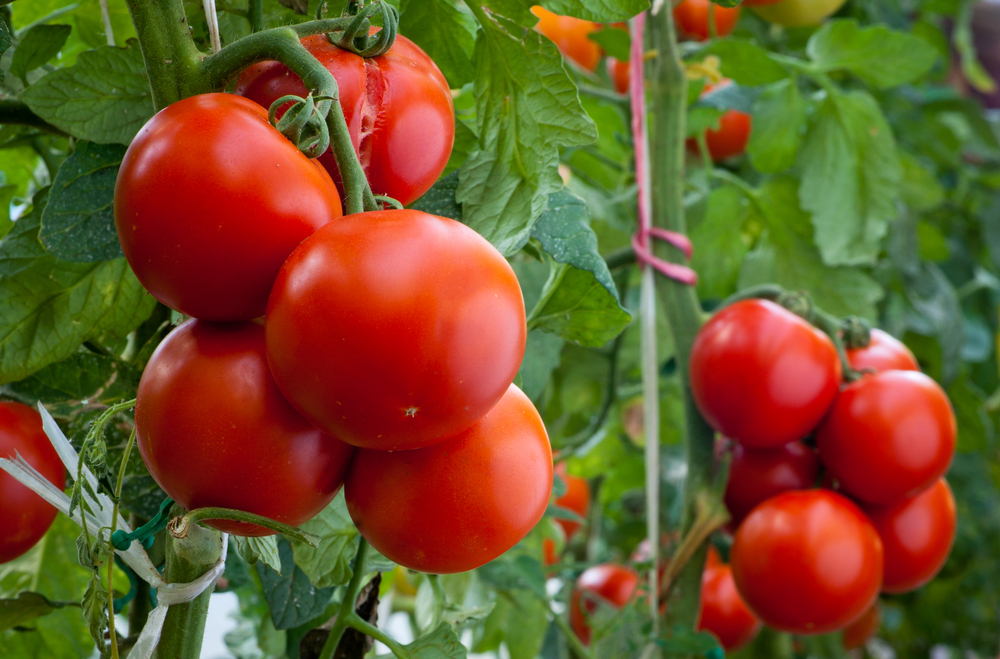
Tomatoes are very easy to grow and are common in most gardens. Tomato plants love the sun and room to roam. There are two types of tomato plant, determinate and indeterminate. Determinate plant growth is smaller on average and they produce one large harvest. Indeterminate tomatoes are continual growers and will grow until the end of the season producing fruit continuously. There are many different varieties of tomatoes and quite a few can be grown in containers and small flower beds. Tomatoes are a great source of vitamins and antioxidants and are a common addition to most diets. They are very versatile; perfect for sandwiches, salads, soups, salsas, casseroles and so much more!

Tomatoes need to grow in full sun locations. If your summers are especially hot, planting in a morning sun area that gets afternoon shade, could be beneficial. Plant your tomato seeds in the spring outdoors when threats of frost have past. Seedlings can be started earlier indoors, two months before the last expected frost, if a head start on production is desired. Transplant outdoors after hardening off when the plants are 6 – 12 in. tall, and the soil outdoors is warm. Amend the soil so the pH is around 6.2 – 6.8, making sure the soil is fertile, loamy, and drains well. Place stakes or cages around your plants after transplanting for support. After transplanting, pinch off a few of the weaker lower branches or bury them in the soil. Water thoroughly. Provide shade for the first week or two to help seedlings retain moisture.
Water often and consistently after planting, but never let the soil get too soggy. It must drain well. Watering in the early morning is best. Always avoid getting the leaves wet if possible. Put mulch around the plants to retain moisture in the soil. Apply fertilizers such as a, 5-10-5, 10-10-10, or 6-10-4 mix regularly. Give the plants ample space to grow and breathe, at least 2 – 4 ft. depending on the variety. Keep the area around the tomatoes weed free and practice crop rotation to prevent diseases.
When tomatoes are firm and red it’s time to pick them off the vine. Green tomatoes can be picked and are edible but have a different flavor. In the south, we love fried green tomatoes! Green tomatoes can also be put into a paper bag and stored in a cool dark place for further ripening. Determinate tomatoes will all ripen up at the same time and will only set fruit once. Pick them all off if frost is coming. Store using paper bag method, can them into sauces or salsas, or freeze them in freezer bags or containers.
Common Diseases
Blossom End Rot on tomatoes is due to a calcium deficiency. To avoid, water consistently, keep plants in an environment with as little stress as possible, mulch, and add lime or Epsom salt water to the soil to improve calcium uptake.
Early/Late Blight appears as brownish black spots on the plants leaves. It can spread to the stems and it spreads quickly to the tomatoes creating rotten brown spots on the fruit. To prevent it: cut out infested plant foliage when it first appears; clean your tools in between cuttings. If more than a tenth of the plant is infected you must pull the plants and harvest any formed tomatoes. Water in the morning and avoid getting foliage wet. Blight is common in hot and humid conditions. Choose disease resistant seeds for planting and practice crop rotation.
Cracking is common when the tomatoes grow too fast, there is a sudden change in weather conditions, or when watering or rains are not consistent.
Mosaic Virus is usually spread by aphids and causes leaves to have yellow, white, or pale streaking, creating a molted look. It leads to deformities and misshaped fruit production. This virus is non curable. Once it infects a plant, that plant should be removed and disposed of. It should not be put in compost. Keep your garden weed free, and consider row covers or netting, to prevent these insects from taking over your plants.
Common Pests
Aphid nymphs and adults like to suck on plant juices, attack plant leaves, stems, buds, flowers, fruits, and the roots of many vegetable plants. To find them look for misshaped, curling, or yellowing leaves. Look for tiny eggs on the undersides of leaves. They can be one of many colors, such as, white, tan, red, yellow, brown, or black. They are tiny and usually cover large portions of the leaves and stems. To prevent them, you can plant companion plants such as herbs that may deter or distract them. You can try and know them off by spraying the plants thoroughly with water. Neem oil, insect soaps, cayenne pepper spray, a dusting of flour, and diatomaceous earth are all effective against aphids.
Flea Beetles are tiny beetles that create sporadic holes in the leaves. They can spread diseases like wilt and blight. To treat for flea beetles, you can use insecticidal soap, an early season insecticide, talcum powder, or sticky traps. All these options will reduce their numbers and damage.
Root – Knot Nematodes makes roots appear knotted up and causes the plant to look weak and unhealthy. Destroy plants that are infected, and solarize the soil by placing it in the sun for a few days. Add fresh compost and crop rotate to prevent.
Hornworms will rapidly eat your plants leaves leaving you nothing but shriveled brown leaves and stems. Remove them as you find them and dispose of them. Companion plant with other plants, such as marigolds, that will attract them. Use Bacillus thuringiensis (Bt) if they are persistent.
White Flies are tiny and white and love to lay eggs on your plants leaf undersides. They are very similar to aphids. They are very common in house plants, and in conditions that are hot and humid. They feed on plants and release the same kind of honeydew as aphids. The plant suffers and it can cause leaves to yellow and die off. Spray infected plants with a strong dose of water to knock off the loose ones and then insecticidal soap to kill the rest. It’s very hard to get rid of white flies permanently, so most gardeners focus on prevention.

0 Comments