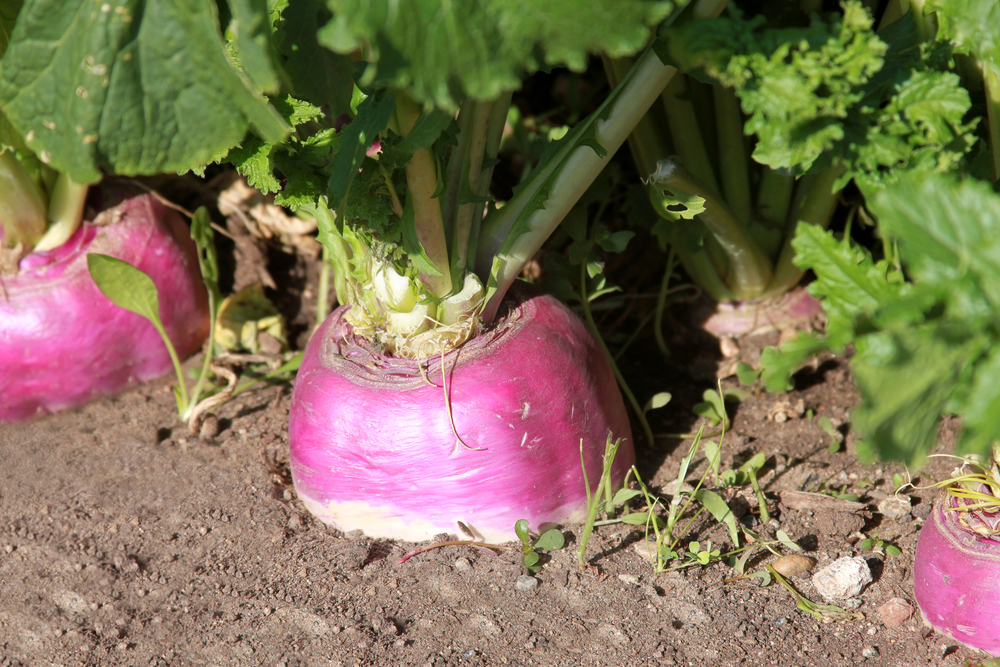
Turnips are great vegetable to add to your early spring or fall garden. Similar to radishes, they are fast growers and produce edible leaves. Turnips are white and purple rooting veggies. They taste great roasted, boiled, sautéed, or mashed. Turnip greens are often boiled and eaten like spinach. Turnips are full of vitamins and minerals, such as, fiber, calcium, magnesium, potassium, phosphorous, folate, and vitamins A and C. They only take a month or two to grow and often have a sweet or mild flavor.
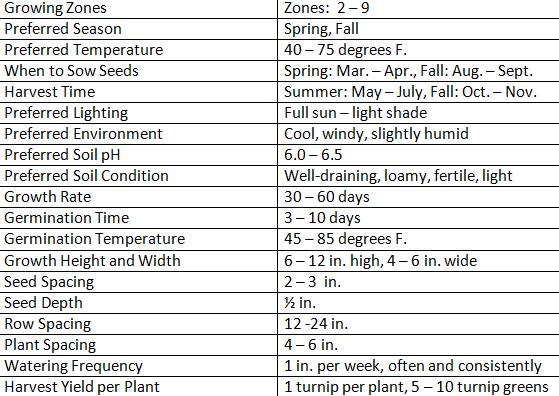
Turnips prefer the spring and fall, so avoid the heat of the summer. Turnip seeds can be planted at three times of the year, very early in spring, late summer, and in the fall. Early spring planting will yield a harvest in late spring, a late summer planting will yield a harvest in early fall, and a fall planting will yield a harvest in late fall.
Plant your turnip seeds in a location that gets full sun, with well-draining loamy soil. Ensure the soil is loose a good 12 -15 inches down. Add compost or sand as necessary to improve its condition. Plant directly outdoors, since turnips are not good with transplanting. Scatter the seeds and cover loosely with a ½ in. of soil. Once the seedlings sprout, look strong, and are about 4 inches high, thin them out and move them 4 -6 in. apart, in rows a foot apart. Add mulch like straw, to retain moisture and prevent weeds from taking over. Keep the soil moist not soggy with consistent watering.
For a turnip green harvest pick the turnips early on, as the young and tender leaves taste the best. After 6 – 10 weeks the turnips should be full size and about ready for harvesting. As they emerge from the soil you can harvest them at any size. Fall turnips are the sweetest and small turnips have a more tender texture. Gently pull the turnips up out of the dirt and shake off the excess dirt.
Do not wash if storing in a cellar or basement. When storing turnips this way, ensure it is cool, dark, and humid. Do not allow the turnips to become too dry or too moist.
Common Diseases
Downy Mildew is caused from wet humid conditions. Overhead watering is also a cause. To prevent, water at the base of the plants, provide good air circulation and keep leaves as dry as possible. A 1 part milk to 10 parts water mix can help if it’s already started. Fungicides can help prevent it.
Powdery Mildew causes a white, powdery growth to form on the plant leaves and can lead to discoloration and lower harvest yields. It is managed best with fungicide, applied regularly.
Common Pests
Aphid nymphs and adults like to suck on plant juices, attack plant leaves, stems, buds, flowers, fruits, and the roots of many vegetable plants. To find them look for misshaped, curling, or yellowing leaves. Look for tiny eggs on the undersides of leaves. They can be one of many colors, such as, white, tan, red, yellow, brown, or black. They are tiny and usually cover large portions of the leaves and stems. To prevent them, you can plant companion plants such as herbs that may deter or distract them. You can try and know them off by spraying the plants thoroughly with water. Neem oil, insect soaps, cayenne pepper spray, a dusting of flour, and diatomaceous earth are all effective against aphids.
Cabbage Root Maggots feed heavily on roots and clump together in groups. They are small, white, legless maggots. It is the baby of a cabbage fly. Cabbage flies emerge in spring and lay eggs near the base of plant stems. Larvae hatch and burrow into the soil to feed on roots. After feeding, they mature into the pupae stage and turn a brownish red color. Soon cabbage root fly adults will emerge. Without treatment the plant will die. If and when you find eggs remove and destroy them. Check roots for maggots and remove with a heavy rinse of water before replanting in fresh soil. Sticky traps, predatory nematodes or wasps, can be effective preventatives.
Flea Beetles are tiny beetles that create sporadic holes in the leaves. They can spread diseases like wilt and blight. To treat for flea beetles, you can use insecticidal soap, an early season insecticide, talcum powder, or sticky traps. All these options will reduce their numbers and damage.

0 Comments