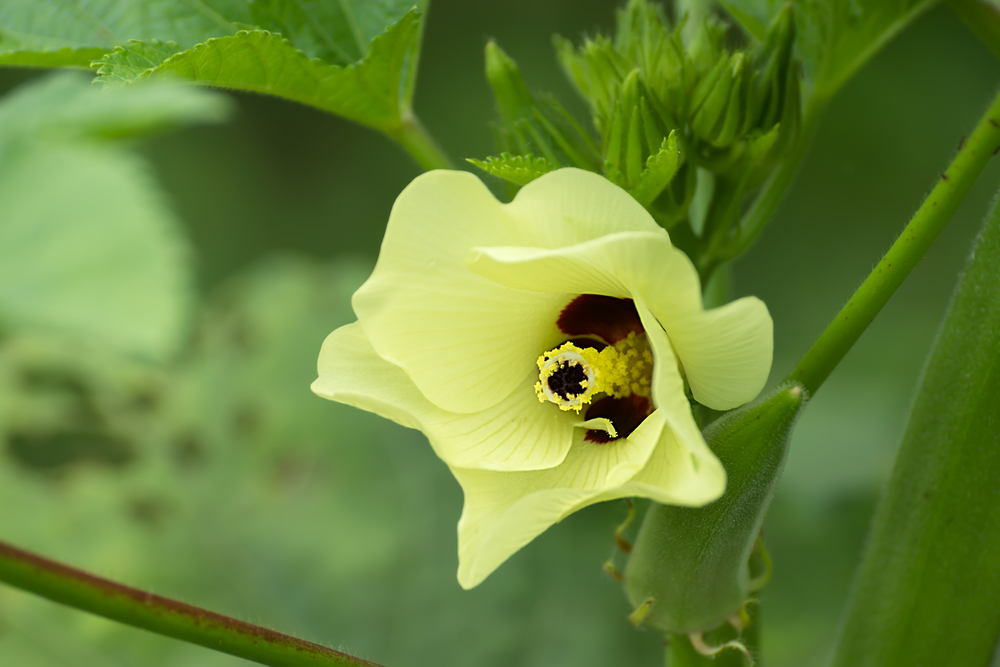
Okra is a fun and easy plant to grow in-ground, in pots, or in raised beds. It grows upright similar to pepper plants and produces beautiful white and yellow flowers that are an elegant addition to the garden. Okra is actually a fruit, but here in the southern states, where we like it fried and sautéed, we treat it like a vegetable. Besides being a more visually appealing plant, okra has some amazing health benefits. Okra is full of vitamin A, C, and K, lectin proteins, good cholesterols, and foliates.
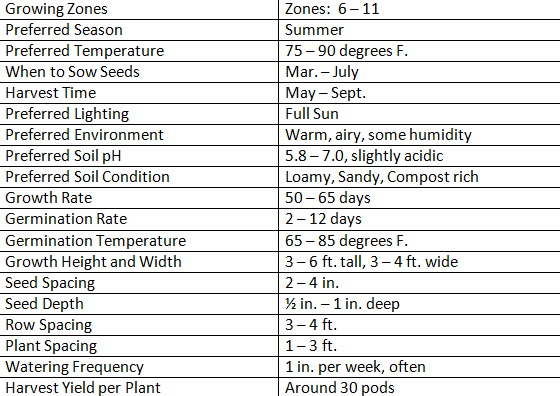
A month before your last expected frost date, start seeds indoors under a grow light, or outdoors covered with a row cover or tunnel. After all threats of frost have past, okra can be planted by seed outdoors as long as temperatures remain over 65 degrees F. Plant in a full sun location and use a sandy, loamy, soil that is rich in compost. When using containers make sure they are well-draining. After seedlings are 4 – 6 inches tall, separate them so each plant has a good foot of space around it. If you’re planting a taller, larger plant variety, separate them 2 – 3 feet apart. Provide mulch covering with straw, to increase moisture levels in the soil, to improve temperature consistency, and to eliminate weeds. Use a fertilizer with a, 10 nitrogen – 10 phosphorous – 10 potassium mixture, about once a month. Water often and consistently, especially in warmer months.
Okra takes about two months to grow. Harvest your okra when it is small to optimize flavor and texture. Larger okra can be inedible. 2 -3 inches is a good size to start picking. Check every few days for new pods. Okra grows fast! Wearing gloves, cut the stem with a knife or scissors, especially if spiny. Remove the lower leaves from the okra plant after the first round of harvesting to improve production amounts. Store okra in freezer bags in the freezer or can them over winter. I prefer to cut and bread my okra before freezing in freezer bags so they are prepped and ready for a good southern fry.
Common Diseases
Fusarium wilt is a fungus that attacks the veins of plants leaves and causes drooping and death over time. It can affect a variety of different vegetables, fruit, and herbs. It is soil bound and long lasting, so crop rotating will not help. Use of an organic fungicide can help prevent it, but once its present its hard to eliminate. Planting disease resistant varieties is the best solution.
Common Pests
Aphid nymphs and adults like to suck on plant juices, attack plant leaves, stems, buds, flowers, fruits, and the roots of many vegetable plants. To find them look for misshaped, curling, or yellowing leaves. Look for tiny eggs on the undersides of leaves. They can be one of many colors, such as, white, tan, red, yellow, brown, or black. They are tiny and usually cover large portions of the leaves and stems. To prevent them, you can plant companion plants, such as. herbs that may deter or distract them. You can try and knock them off by spraying the plants thoroughly with water. Neem oil, insect soaps, cayenne pepper spray, a dusting of flour, and Diatomaceous Earth are all effective against aphids.
Earworms are small caterpillars that turn into moths. They attack the plant’s fruits and cause damage to leaves in the form of small holes. In the moth stage they will fly to other plants and lay eggs. They are a common pest and hard to manage in high infestations. Insecticides applied regularly and applications of Bacillus thuringiensis (Bt) regularly, can lower their numbers and lower yield losses.
Stink Bugs will lay silver eggs on the undersides of leaves. The nymphs are tiny, red, with black lines on their back. They will feed on most vegetable plants and the adults which are either green or brown will hide within plant foliage. They will pierce and suck on stems and fruit, and some can spread disease this way. To prevent them, till overwinter, and keep the area debris free. Handpick as you see them, set out soapy water traps, keep an eye out for eggs, use covers to protect your plants from insects, treat any nymphs with insect soap, or neem oil (not effective on adults).

0 Comments