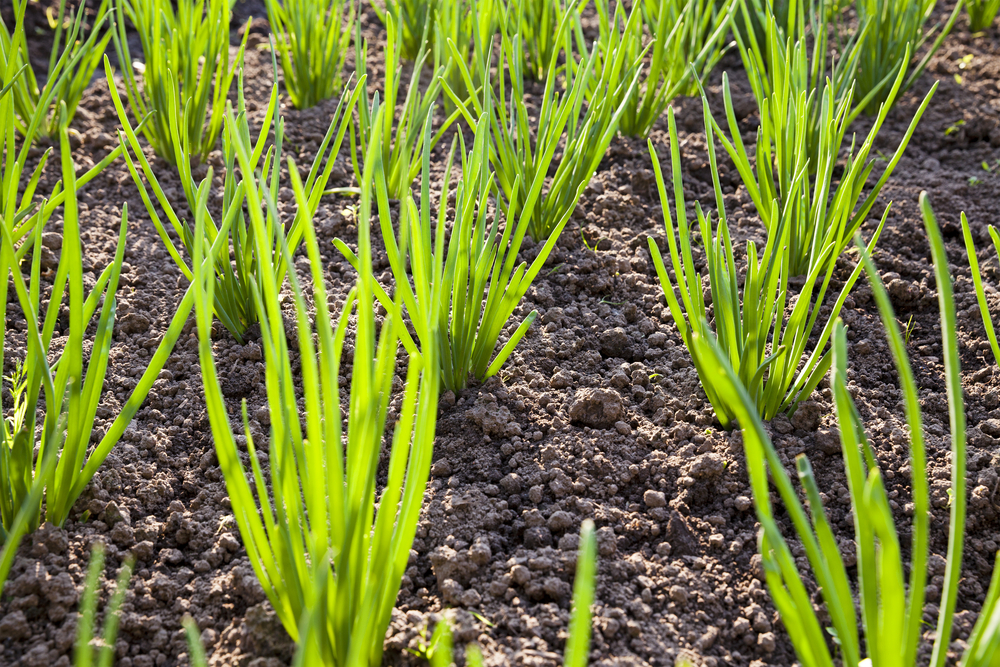
Onions are a perfect addition to the garden because they have so many uses in the kitchen and can be stored in the cellar all winter. Onions are a cool season crop that is easy to grow and are good companion plants due to their strong aroma. They don’t require as much attention as some of the other vegetables do, making them easier to care for in the garden. Onions are full of many of the vitamins and minerals necessary for a healthy diet, such as, Vitamin C, B-6, iron, and magnesium. They even contain some protein and healthy carbs! Onions can be grown in ground, in beds, or in containers. They prefer a nice sunny spot, and a nice cool breeze.
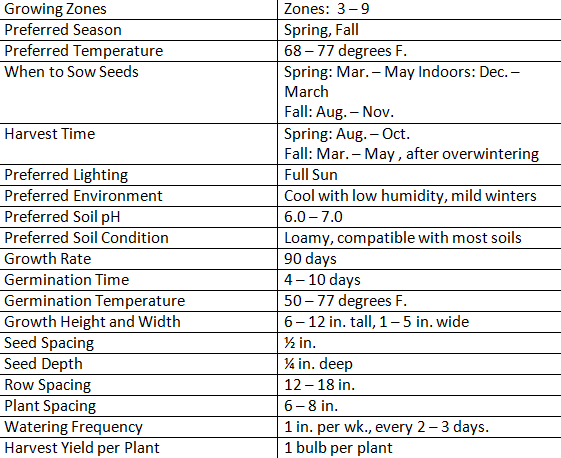
Onions prefer the cooler seasons and can be planted in the spring or fall. Plant onions, when the threat of frost has just past, or in the later summer months providing them a good month and a half to become established. Fall planted onions can overwinter in mild winter locations, and will be healthy, and ready when the next spring arrives. Where winters are extremely cold, an early spring planting is better.
Start onion seeds indoors about six weeks before you plan to transplant outdoors. Grow lights can help keep soil temperature above 50 degrees F. for better germination.
When transplanting or when starting with onion sets instead, plant the transplants or sets between 4 – 6 inches apart, in rows that are 12 – 18 inches apart. Bury the onion bulbs with their pointed end up, about an inch down. Mulch around the onions with straw.
Make sure the soil is well draining, fertile with compost or manure, loose, and airy. Adding sand to a more compact soil can help it become more onion friendly. Choose a sunny location with no shade and fertilize every month with a nitrogen based fertilizer. Water consistently and regularly, about once per week, especially when there are no rains.
When foliage turns yellow and then browns, onions are ready for harvest, and they will begin to fall over. Bend down the tops of the plants, and loosen the bulbs in the soil to help them dry. When the tops of the onions are brown, the plants can be pulled completely. Harvest in late summer before the cool temperatures of fall arrive. Cut the roots and tops down to about an inch above the onion. Let the onions dry out on the ground for a few days, handling carefully, to prevent bruising. Move the onions to a screen for curing and allow them to dry in an airy location for a few weeks.
Store onions in a cellar or basement at 40 to 50°F, preferably in a mesh bag or nylon stocking. Do not store onions with potatoes, apples, or pears.
Common Diseases
Bacterial or Neck Rot are fungal or bacterial diseases that arise from an improperly preformed curing or storing process. Bacterial rot will cause yellowing through the neck, causing water-soaked and soft spots. Neck rot causes sunken necks, with soft spots, and a gray mold will appear. Both of these rots are caused from excess moisture. Keep the onions as dry as possible and stored in the correct temperatures.
Downy Mildew is caused by a fungus that causes a purple-brown mold to develop in irregular shaped patches. These patches are tiny mold spores produced by the fungus, and this disease is very common in wet or humid weather. Severely affected leaves collapse and die in a few days. Downy mildew overwinters in soil and debris and is spread by the wind. To prevent, practice crop rotation, and use fungicides regularly in highly susceptible areas.
Leaf blight often called, “blast,” is a disease common in eastern and mid-western states. The disease causes leaf spotting and tip dieback, adversely affecting the maturity and quality of the bulbs. White lesions with a green halo appear on the leaves. The lesions center eventually collapses and turns tan. Leaf blight is caused by a fungus that overwinters in crop debris and in onion cull piles. Spores are produced in late spring and summer, and are spread by wind. Cool wet summers provide the perfect conditions for leaf blight. To prevent, destroy cull piles, crop rotate, and use fungicides.
Purple blotch is a disease caused by a fungus that affects the tops and bulbs of onion plants. The disease is more common in the Midwest. The fungus overwinters in crop debris and is spread by wind and rain in the spring. Tan spots will appear on leaves that will sink and expand at a rapid pace up and down the plant. Eventually, the tops of the plant will collapse. Crop rotation and protective fungicides are the best prevention of purple blotch.
Onion Smut is very common. Dark brown streaks appear up and down the leaves with a blister appearance. Spores develop within the blisters and become sooty. The leaves will twist and fall prematurely. Bulbs are more likely to end up with soft rot issues in storage. Smut is spread in the soil to seeds and grows with the plant over time. Infection is unlikely in temperatures over 80 F. For prevention, start with onion sets that are disease free.
Common Pests
Cutworms cut stems of plants off at their base and they love a new transplant. Coffee grounds, egg shells, and diatomaceous earth are helpful when spread around plant bases and stems. Bacillus thuringiensis (Bt) or another natural insecticide can be used in extreme cases. You can hand pick them at night every few days to lower their numbers.
Onion Maggots are more severe in northern states. Adults are like tiny house houseflies. They lay eggs in the soil near seeds or seedlings and the larvae feed on the new plants. This can cause death of a small seedling. Once plants are established, maggots are not as likely to cause plant death. Use of insecticides regularly and covering onions with mesh netting can help prevent onion maggots.
Thrips are tiny thin flying insects that like to suck and feed on plants, and lay eggs on leaves. It is possible for them to spread viruses so it’s important to look out for them. A few treatments of insecticidal soap can stop smaller infestations. Keeping plants covered with insect drapes and sticky traps are helpful preventatives.

0 Comments