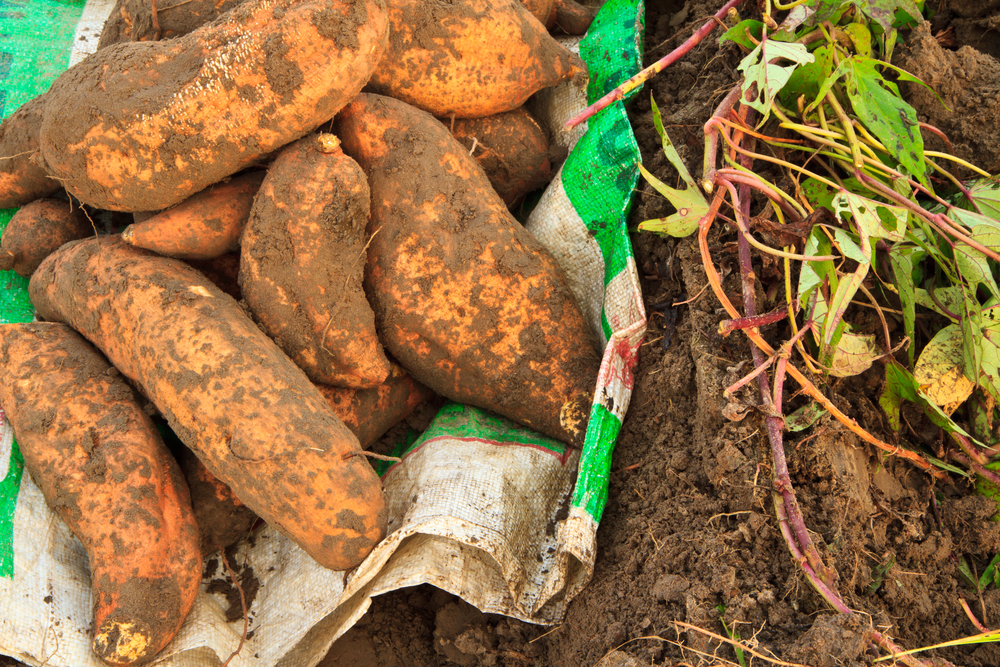
Sweet Potato is a wonderful addition to the garden because it is such a hearty producer. One sweet potato slip can produce up to 12 more potatoes! That’s amazing! Sweet potatoes need ample room to grow and grow best in ground verse a container, but under the right conditions, they can be grown in all types of ways. The main thing to remember with them is to consistently hill or mound around the vines to produce more tubers. Sweet Potatoes are a great choice for nutrition. They are full of fiber, protein, vitamins A, C, E, and manganese. They are delicious baked, in soups, and in casseroles. My favorite way to eat them is baked, and then drizzled with butter and spoon full of brown sugar. Yummy!
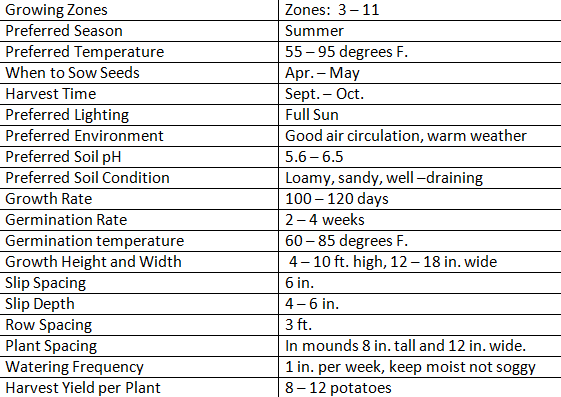
Plant your potato slips early in spring after the threat of frost has past. They can be started a month or two earlier indoors in 1 – 1.5 gallon buckets filled with pebbles or mulch then potting soil. Use grow lights and grow mats as necessary to keep them warm enough to grow. They prefer temperatures above 60 degrees. Water evenly and on a consistent schedule for up to 6 weeks before expecting any plant sprouts. Once the potatoes have grown to 6 – 12 inches tall indoors and the temperatures outdoors have warmed up enough, it is time to transplant the potatoes outdoors.
When you are ready to transplant outdoors or plant slips directly in the warmth of spring, choose a sunny location with lots of room and fresh fertile soil. Potatoes prefer a sandier soil that is loamy and drains well. Tilling the land or bed first may be necessary. Till a good foot down and remove any weed roots and rocks. Ensure the soil is loamy and not too compact. If it is compact add sand or compost to increase its fertility and air flow.
Transplant the new sweet potato plants so they are a good foot apart in rows that are about 3 feet apart. Create 8 in. tall mounds or small hills at each spot you plan to place a plant in. When placing the plants in the mounds cover all roots and a bit of the main stem mounding up around the plants base. Water and feed with a fertilizer high in phosphorous. Water generously for the first couple of days and then keep the soil evenly moist after that watering a few times a week.
As the potato plants start to grow, keep the rows weed free and maintain the mounds by adding more soil and mulch as necessary. Water more deeply in the heat of the mid-summer, but not as often, in the late summer. Every month or so, water the mounds with fertilizer and add more soil and mulch. Do not cut back the vines.
After about 3 – 4 months the leaves of the potato plant will start to turn yellow and die back as the season changes. This means they are ready for harvest and can be harvested up until the first fall frost. Loosen the soil around the potatoes gently with a spade fork. Cut back some of the vines if necessary. Carefully pull the tubers from the ground, and gently shake off the excess soil. Do not wash.
It is necessary to cure sweet potatoes for a few weeks so they can develop a tough skin. Keep the roots in a warm place around 80 degrees F. with a high level of humidity (90 %) for about two weeks. This could be an outdoor table or a shaded barn, or garage.
Once cured, sweet potatoes can be stored at temperatures around 55 degrees F. for about six months. Wrap in newspaper, or store in airy bags in baskets or a wooden box or crate. Root cellars and basements are common choices. Do not rinse or wash the potatoes until you are ready to eat.
Common Diseases
Early/Late Blight appears as brownish black spots on the plants leaves. It can spread to the stems and it spreads quickly to the tubers creating rotten brown spots on the potatoes. To prevent it: cut out infested plant foliage when it first appears; clean your tools in between cuttings. If more than a tenth of the plant is infected you must pull the plants and harvest any formed potatoes. Water in the morning and avoid getting foliage wet. Blight is common in hot and humid conditions. Choose disease resistant seed potatoes for planting and practice crop rotation.
Leaf Spot is common on potatoes and rooting vegetables. It is caused by a fungus that is in soil and can survive for 2-3 years. Overhead rains and watering spreads the fungus causing the plants to develop brown, yellow, tan, or gray spots making the greens look sickly and unhealthy. A copper based organic fungicide is an effective preventative. Using disease free seeds, rotating crops, and limiting overhead watering, will also help.
Sweet Potato Scurf is caused by the fungus, Monilochaetes infuscans, and only infects sweet potatoes and morning glories. It loves high humidity conditions and grows on tuber surfaces. It is common in poor storage conditions and appears as dark bruising on the potatoes skin that almost appears wet under the skin of the tuber. It spreads commonly through infected soil and plant debris so practice good crop rotation and keep the area debris free. Organic fungicides can also be effective.
Stem Rot is caused by the fungus, Fusarium solani, and causes the roots to start to rot, stem cankers, and leaf spots that leads to death. Large circular bruised looking lesions appear on the tubers. It is common when soil is too cool and damp, too dry, or when tubers are exposed to extreme temperatures. Avoid with good garden hygiene, by practicing crop rotation, and watching for conditions that could cause it. Proper care and curing should prevent most cases.
Common Pests
Aphid nymphs and adults like to suck on plant juices, attack plant leaves, stems, buds, flowers, fruits, and the roots of many vegetable plants. To find them look for misshaped, curling, or yellowing leaves. Look for tiny eggs on the undersides of leaves. They can be one of many colors, such as, white, tan, red, yellow, brown, or black. They are tiny and usually cover large portions of the leaves and stems. To prevent them, you can plant companion plants such as herbs that may deter or distract them. You can try and knock them off by spraying the plants thoroughly with water. Neem oil, insect soaps, cayenne pepper spray, a dusting of flour, and Diatomaceous Earth are all effective against aphids.
Colorado Potato Beetles are a beetle that has black strips down its body and little black spots on its head. They are tannish yellow to orange in color. Colorado potato beetles are present in every state and will lay eggs on leaves and eat foliage. To prevent them hand pick them at first sight, use organic pesticides that target them, or try and control them with diatomaceous earth during their nymph state.
Flea Beetles are tiny beetles that create sporadic holes in the leaves. They can spread diseases like wilt and blight. To treat for flea beetles, you can use insecticidal soap, an early season insecticide, talcum powder, or sticky traps. All these options will reduce their numbers and damage.

0 Comments