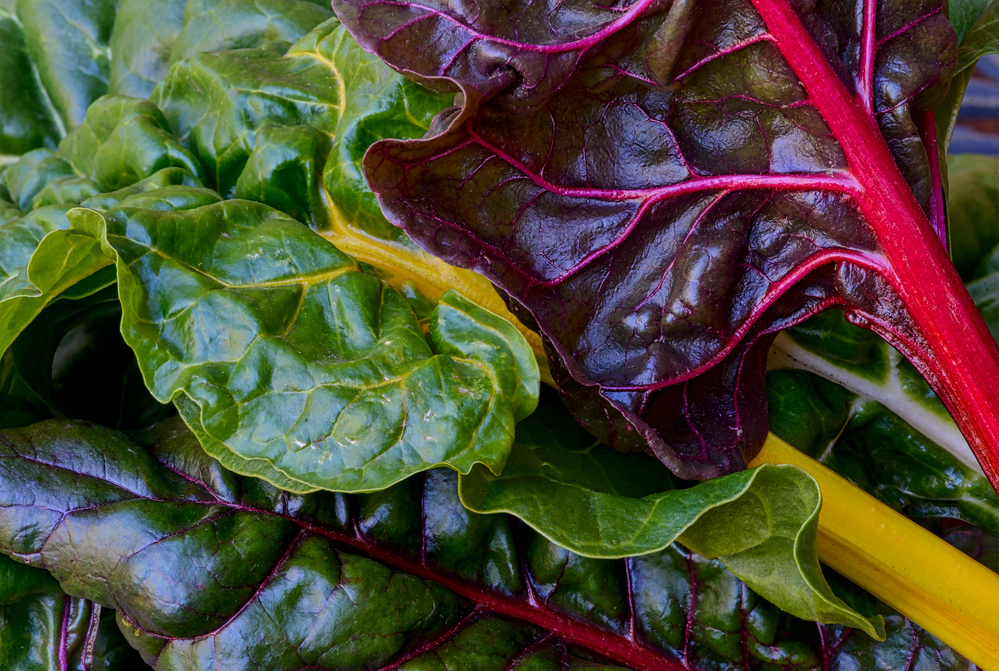
Swiss Chard is a beautiful and colorful leafy vegetable that cooks up similar to kale and spinach. This plant prefers the spring and fall seasons as the summer heat can cause them to wilt. Swiss chard is a commonly eaten vegetable and is a great source of fiber, iron, magnesium, potassium, and vitamins A, C, and K. Leaves and stalks are often steamed, sautéed, boiled, or roasted. Similar to Kale and Spinach it has a mildly bitter flavor that can be reduced through cooking and spices.
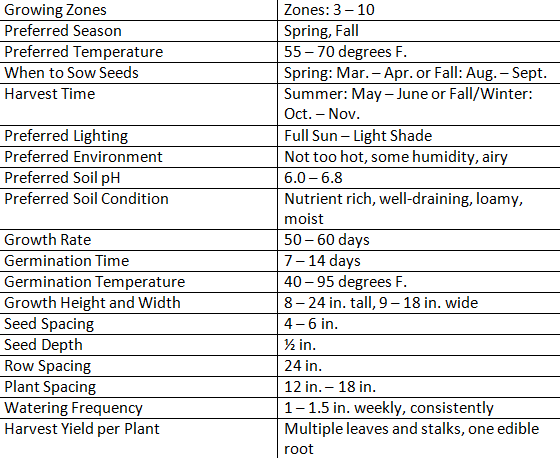
Swiss chard can be grown in some locations from Spring – Fall. Plant seeds indoors under grow lights two months before the first expected frost or outdoors a month before the first expected frost in spring. For fall, plant seeds directly outdoors in late summer to early fall. Provide nutrient rich soil and ensure it drains well and is not too hard and compact. Add compost if necessary to get your plants off to the best start. Give the plants a good amount of room, spacing them 12 – 18 feet apart. Water consistently and evenly, keeping the soil moist not soggy. Provide plant food for extra nutrients on a continuous basis. In the summer heat provide extra water.
Harvest leaves when they are young and tender for more flavor and color! Simply cut the leaves off about an inch above the plant base starting with the outer leaves. Leave the inner leaves alone to help the plant regrow. To harvest the whole plant all at once and have it regrow cut the whole plant off a good inch above the base of the plant. It will regrow but will not produce leaves as large. Use the leaves in salads or cook like you would spinach or collards. In some locations Swiss Chard can behave like a perennial lasting a number of seasons.
Store Swiss Chard in the refrigerator, in a loose plastic bag or sealed container, for up to two weeks. Wrapping any leafy vegetable with a moist paper towel, before bagging or placing it in an air tight container, will make it last longer.
Common Diseases
Downy Mildew is caused by a fungus that causes a purple-brown mold to develop in irregular shaped patches. These patches are tiny mold spores produced by the fungus, and this disease is very common in wet or humid weather. Severely affected leaves collapse and die in a few days. Downy mildew overwinters in soil and debris and is spread by the wind. To prevent, practice crop rotation, and use fungicides regularly in highly susceptible areas.
Leaf Spot is common on potatoes and rooting vegetables. It is caused by a fungus that is in soil and can survive for 2-3 years. Overhead rains and watering spreads the fungus causing the plants to develop brown, yellow, tan, or gray spots making the greens look sickly and unhealthy. A copper based organic fungicide is an effective preventative. Using disease free seeds, rotating crops, and limiting overhead watering, will also help.
Common Pests
Aphid nymphs and adults like to suck on plant juices, attack plant leaves, stems, buds, flowers, fruits, and the roots of many vegetable plants. To find them look for misshaped, curling, or yellowing leaves. Look for tiny eggs on the undersides of leaves. They can be one of many colors, such as, white, tan, red, yellow, brown, or black. They are tiny and usually cover large portions of the leaves and stems. To prevent them, you can plant companion plants such as herbs that may deter or distract them. You can try and knock them off by spraying the plants thoroughly with water. Neem oil, insect soaps, cayenne pepper spray, a dusting of flour, and Diatomaceous Earth are all effective against aphids.
Cabbage Worms become small white butterflies. They are very small little caterpillars with a yellow stripe and often lay eggs on your plants. They create heavy feeding damage on leaves in the form of irregular holes and can leave a stem leafless. Sticky traps and regular treatments of Bacillus thuringiensis are effective preventatives.
Spider Mites are hard to detect until infestation is rampant. The mites feed on leaves causing yellowing striping on the outer sides of the leaves. This eventually causes the entire leaf to yellow and brown robbing the plant of nutrients. Reduce and eliminate reasons for plant stress and incorporating predatory mites are ways to control them.

0 Comments