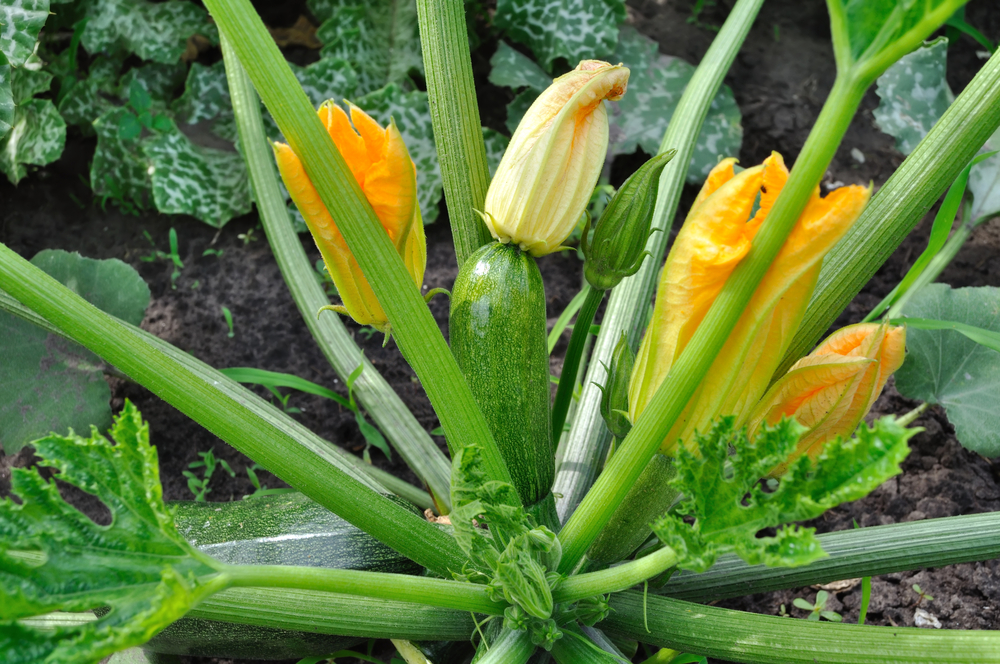
Zucchini is a summer lover and is in the summer squash family. It soaks up the summer sun and in late summer produces beautiful fruit from all its basking glory. It is an easy plant to grow and care for. They just need warmth and lots of water. Zucchini is a great source of vitamins, minerals, and antioxidants, especially fiber and vitamin B6. It is a wonderful addition to soups, and casseroles, or simply sautéed with butter as a side dish. I love to pair it with bottleneck squash.

Wait until the soil is warm in the spring to plant zucchini. It should be around 65 – 70 degrees F. during the day. Zucchini needs lots of sun and rich fertile well-draining soil. Sow two seeds in each hole, 3 – 4 in. apart, and then thin out the weaker ones as they grow. Water generously when planting and provide fertilizer. Provide more fertilizer once a month. Use mulch to retain moisture and prevent weeds. Use row covers as necessary to provide shade in hot summer months. Insect covers can help prevent pests.
Zucchini are ready to harvest when they are still tender and young, 3 -8 in. long. Cut the zucchini carefully from the vines to prevent damage to the plants. Leave an inch of stem on the fruit. After washing, store in the refrigerator for up to two weeks, or cut in chunks or strips for freezing in freezer bags.
Common Diseases
Bacterial Wilt is transferred to vining plants from insects and causes wilting of the vines stems and leaves over time. It is not treatable once a plant is infected. Remove any infected plants, and soil. Control with disease resistant varieties and insecticides that prevent the insects that transfer it such as cucumber beetles.
Downy Mildew is caused from wet humid conditions. Overhead watering is also a cause. To prevent, water at the base of the plants, provide good air circulation, and keep leaves as dry as possible. 1 part milk to 10 part water mix can help if it’s already started. Fungicides can help prevent it.
Powdery Mildew is caused by spores transferring in the wind. It causes a white powdery film to develop of the plants leaves. Older leaves will yellow and turn brown. Treatment involves monitoring for severity and treating with a fungicide when necessary.
Common Pests
Cucumber Beetles come in different types. The striped cucumber beetle loves to feast on the fruits of your labor, while the spotted varieties will pretty much eat anything and more types of plants than the stripped beetles. Besides causing damage to your plants these beetles can also spread diseases. To prevent them, use sticky traps, hand pick or create traps for them, companion plant with plants that deter them, try row covers, and use a insecticide if it is specifically made for use on cucurbits, as they are sensitive.
Squash Bugs look a bit like stink bugs and are larger bugs with a gray or brown body. They tend to group on the undersides of leaves and lay eggs. They cause damage to leaves, stems, and vines when feeding and can destroy a smaller plant. To prevent them, try to detect them early by removing any eggs and destroying them, setting traps for the adults, and using insecticides if necessary.
Squash Vine Borer lays eggs at the base of squash plant varieties. The larvae hatch and feed on stems and fruit. If your squash plants are struggling, there may be a borer issue. They burrow in soil over the winter and match to become moths in the summer. To prevent them, practice good crop rotation, till the soil in the spring and fall to kill larvae, create barriers around the stems or by using tight row covers, use diatomaceous earth around the stalks, or an organic insecticide.

0 Comments