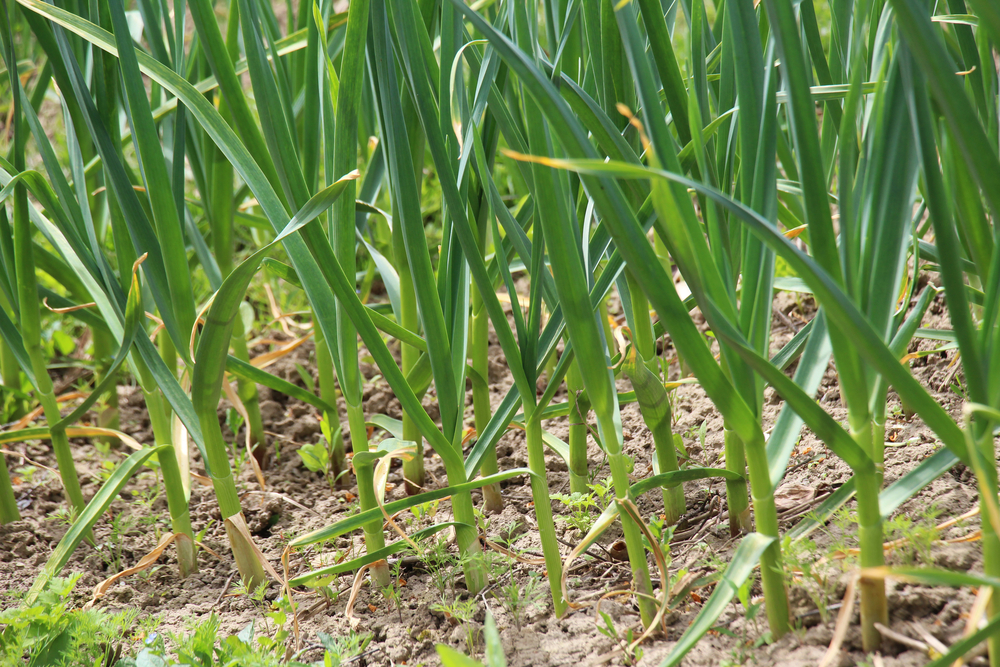
Garlic is best grown in the fall through the winter. Its bulb needs time to grow and mature in the winter month’s cold soil. It can be grown in early spring in milder climates for green shoot cuttings. Each bulb of garlic can contain up to 20 garlic cloves. Many people treat garlic as an annual, but if cared for and harvested properly, it can become a long lasting perennial in the garden. Garlic is full of wonderful vitamins, and antioxidants when added to cooking. It can even be great natural pest deterrent due to its strong scent; many animals and insects really don’t like garlic!
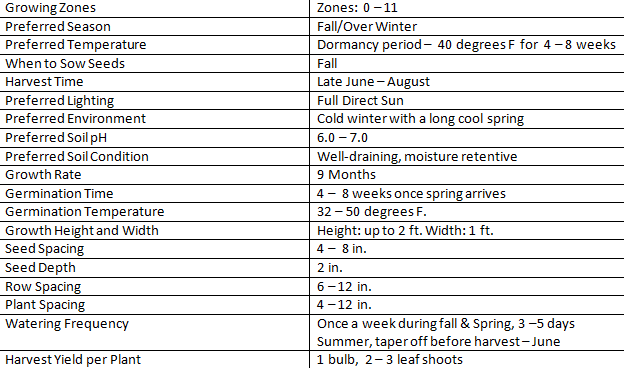
Choose soil that is rich and pre-fertilized. Choose cloves that look healthy, are a nice size, and appear disease free. A few days before planting, break the cloves off the bulb leaving their outer paper layer intact. Plant the cloves about half a foot apart and 2 in. deep. The wider clove base should face down and the pointed end should face up. During late fall and winter, mulch heavily. Remove the mulch in spring when new growth appears and replace with straw. Remove any flowers to promote bulb growth. Fertilize heavily with a nitrogen based fertilizer in early spring. Keep the growing area free of weeds and debris. Fertilize again in early summer and anytime the leaves appear yellow. Water often and consistently.
When the plants start to yellow and turn tan and brown in the summer it’s time to harvest. Harvest before the plants are completely dried out. Sample one bulb first to see if they are ready before pulling out all the plants. If the bulb wrapping is super thin, they probably are not ready. If the bulbs are splitting apart they may have stayed in too long. Carefully dig the bulbs out to avoid root damage, brush off any loose dirt, and lay the garlic plants out to dry out.
Cure Garlic for a good 2 weeks. Hang them by string, in bunches of 4 – 6, upside down in a dry cool place. When the crown is hard, and the bulbs are completely dried out they are ready for storage. Cut the plants foliage off about 2 in. from the bulb. Do not wash the bulbs, just brush off the excess dirt. Keep the garlic stored in a cool dark place like a cellar or basement. Do not store it in a humid location. If stored properly the garlic can be kept in storage until the next season’s harvest. Save a few bulbs to plant for next year.
Fungal Diseases , such as, Basal Rot, White Rot, and Downy Mildew are common problems for garlic plants. Rot presents as white fuzzy fungal growth on roots and stems of the garlic. Mildew appears as fuzzy white mildew on the leaves and yellow discoloration can occur. Prevent by hot water bathing cloves can help reduce rot issues, avoid planting infected cloves or in infected soil. Crop rotate and provide young plants with fresh clean soil.
Onion Maggots are common pests of onions, leeks, garlic, shallots, and chives. They are a type of fly baby. Flies lay their eggs on the plants and in 2 – 3 weeks they hatch and the maggots feed off the plants below ground. Signs are yellowing, floppiness in shoots, inability to thrive. Prevent by timing seed planting a week before the fly’s emergence, crop rotate regularly, remove all crop debris and cull foliage before over wintering.
Onion Thrips are tiny little insects that feed on the plants shoots, near the base. They are aggressive feeders and can cause a lot of damage to the plants. They also carry viruses. Look out for them in late summer, early fall. Use yellow or white sticky traps and carefully examine plants to remove any newly developed populations. Remove with water spraying or a damp cloth.
Mites are usually found at the base of roots. Yellowing of the green garlic shoots, with a browning at the top of the shoots, is a sign of mites. Mites lead to poor root and plant growth. The best prevention is to provide clean soil and cloves when planting. Mite can survive on dried out bulbs, a hot water bath can kill them off but may lower the cloves ability to germinate.

0 Comments