n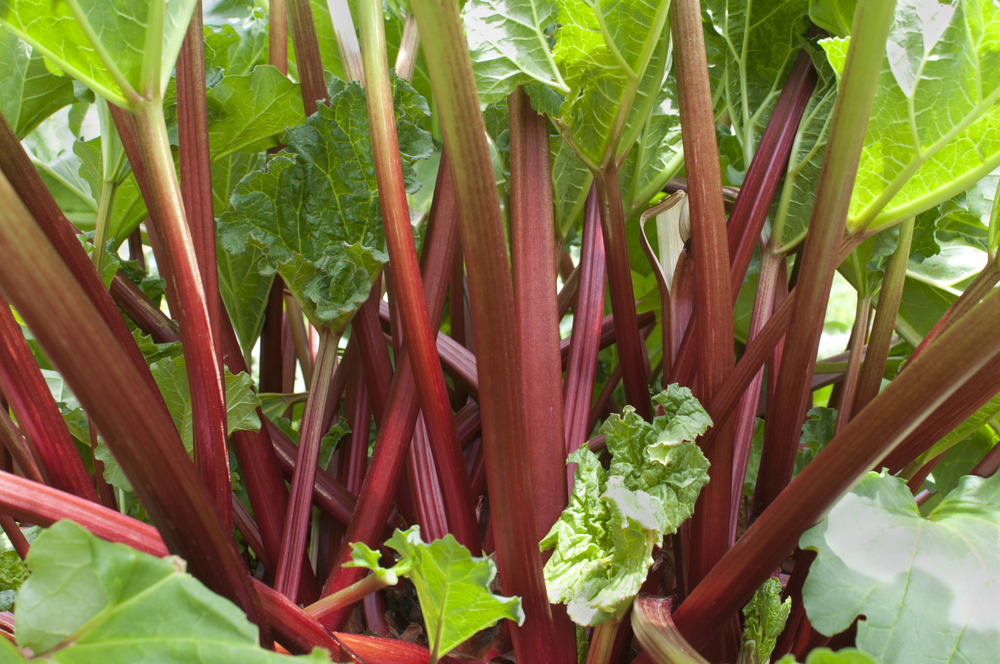
Rhubarb is a perennial vegetable that needs a period of winter dormancy to thrive. When planted from seed it takes 3 years to fully mature for harvest. Only the stems of the plant are edible. The large heart shaped leaves are toxic so be careful not to ingest them. Rhubarb prefers mild temperatures in the summer and colder winters, so it grows better in northern locations. Rhubarb is a lovely visual addition to the garden because it is a beautiful plant with large, vibrant, red, and dark green leaves. Rhubarb stalks are used in cooking to make pies, cakes, jams, jellies, sauces. Rhubarb provides lots of nutrients, such as, vitamin A, C, K, Folate, and Manganese.
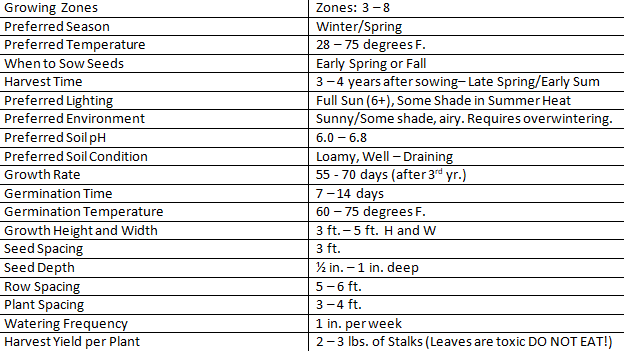
Give rhubarb a nice sunny spot with plenty of room to spread out. This plant can get pretty big, up to 3 feet tall and wide. Plant seeds in late fall or early spring in well-draining, loamy soil. If planting seeds it will take 3 years for them to mature to harvest. It is easier to plant one year old crowns instead. Plant them 2 – 4 ft. apart, and in rows 3 – 4 ft. apart. Plant so the buds are facing up and the eye of the crown is about two in. deep in the soil. Water regularly but don’t let the plants get soggy. Remove any seed stalks as they grow to encourage leaf and stem production. Fertilize each spring and in the late fall, remove any dead leaf debris and cover with organic mulch.
Do not harvest any stalks until the second season, and even then do so sparingly. After the third year, rhubarb stalks can be harvested through mid-summer. Only harvest when there are a good amount of stalks that are about 1 – 1.5 ft. in height. Gently twist at the bottom of the stalk and pull gently or cut it off with a clean knife. Always leave a few stalks so the plant continues to produce. After mid-summer its best to leave the stalks on the plant. This will allow them to prepare for next year’s growth. Store rhubarb stalks in the refrigerator for a few weeks in a sealed container or freeze for up to a year. Never eat the leaves of the plants, only the stalks.
Botrytis (gray mold) appears with yellow/ brown/gray spots with water-soaked margins on the leaves/flowers. There will be a gray mold, buds will remain closed, stem will have lesions, rotting, or a scorched appearance. To prevent, destroy infected plants and remove plant debris regularly. Disinfect your tools regularly. Provide good air circulation and light. Don’t overhead water.
Fungal Leaf Spot appears as leaf spots on lower leaves that get big and turn brown/black. The disease progresses upward and leaves will die. Destroy infected leaves and remove plant debris regularly. Disinfect your tools and plant disease resistant varieties. Provide good air circulation and don’t overhead water.
Phytophthora Crown and Root Rot causes the leaves to appear discolored and wilted and they will start to dieback. Cankers appear near the stems base and roots rot. Plant growth becomes stunted and they die. Destroy infected plants and surrounding soil, prune out branch cankers and remove plant debris. Plant disease resistant varieties, and don’t overhead water.
Rhubarb Curculio is a weevil-like beetle that bores into the plants stalks/crowns. It causes notches on the stalks and leaves and the plants start to die. Handpick adults off the plants in early summer.
Slugs/Snails create irregular holes in the plants leaves and they leave slimy secretions. Handpick and avoid using bark mulch. Drown them in a container of beer or sugar water and yeast, set in a place that is ground level. Apply diatomaceous earth around the plants.

0 Comments