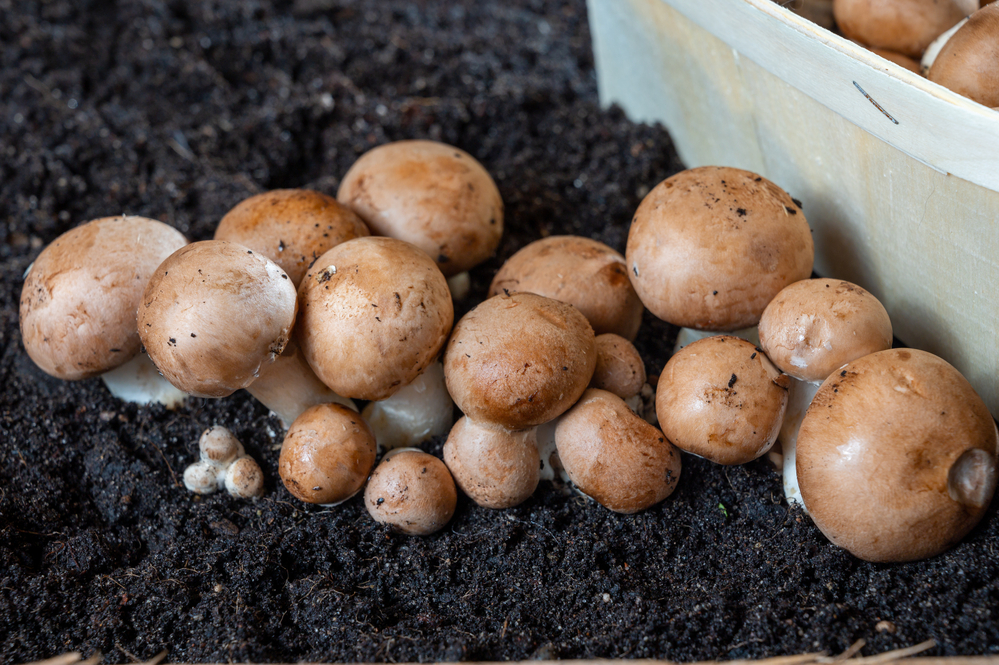
Edible Mushrooms can be grown at home with the right soil mixture, spores, and a dark location. They are surprisingly very easy to maintain and grow. There are a few varieties that are great for beginners to grow such as button or blue oyster varieties.
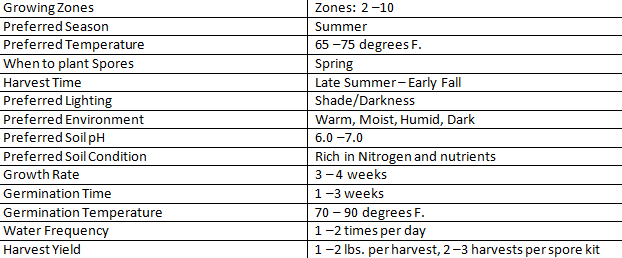
Start with a six inch layer of nitrogen rich manure/compost in a rectangular wooden box. It should have a lid or be placed in a completely dark location during the growing process. Using a mushroom growing kit with the selected spore type, spread your inoculated material out over the soil and mist it until it is all covered thoroughly with water. For the next few weeks keep the mushroom bed wet, dark, and 70 degrees F. or warmer.
When the mycelium (webbing or spores) starts to appear, cover it, with a few inches of damp peat moss or potting soil (casing). Lower the mushroom beds temperature to 55 degrees F. and cover the bed with plastic wrap or moist newspaper to help the soil retain moisture.
After about a month, small mushrooms should start to appear. When you’re ready to eat them, harvest by twisting the mushroom off the bed and cover the spot with a bit of peat moss or potting soil to encourage new growth. The mushrooms should continue to produce for 3 – 6 months.
Waterlogged mushrooms have surprisingly become too soaked with water. To prevent this provide adequate air flow, and provide a humid environment instead of watering mushrooms directly.
Drying Out can occur if the mushrooms receive too much light or not enough water. Move to a darker location if necessary and provide more humidity.
Elongated thin stims and small caps can be a sign of poor air circulation. Increase air flow in the area to improve the mushrooms size.
Past Maturity mushrooms will be extra-large and with rapid growth rates. Harvest the mushrooms earlier to prevent loss of quality.
Mold is common in the right conditions and it can contaminate a bed of mushrooms. In those situations dispose of the contaminated bed and clean the area with a mild bleach solution.
Fungus Gnats are a common mushroom pest. Once established these insects can be hard to eradicate. Some options to combat them include, removal of the infested mushroom beds to start fresh with new soil and spores, using nets or tents to prevent the gnats from gaining access to the mushrooms, using sticky traps or vinegar traps, or introducing predatory insects or plants.

0 Comments