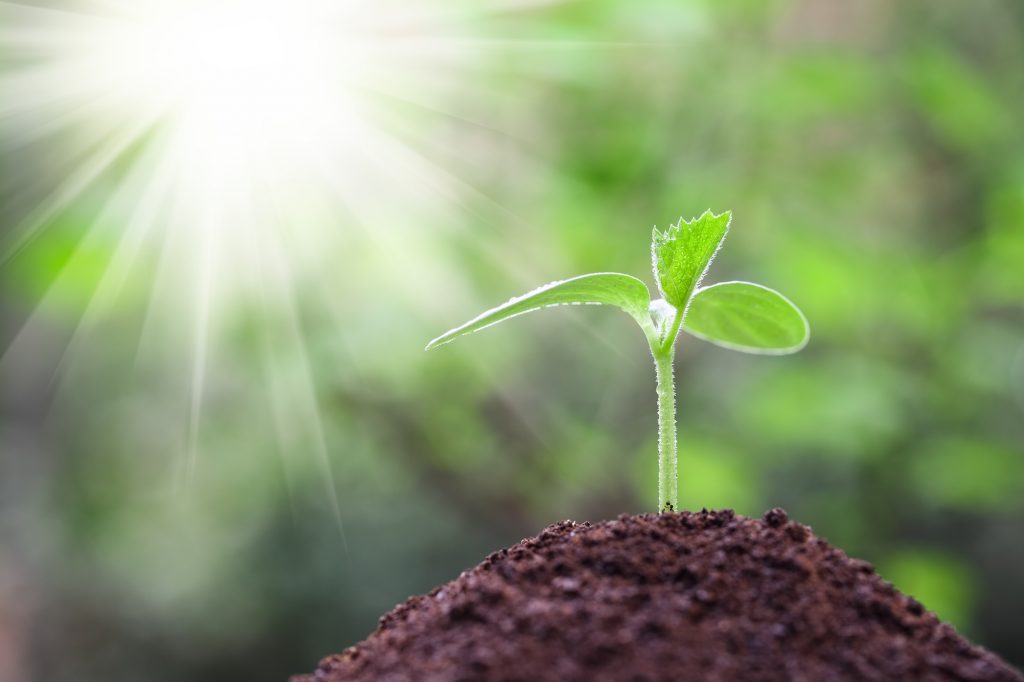
Growing seeds can seem as simple as sticking the seed in the dirt and waiting for it to grow, but that doesn’t always work out the way you are hoping. Some seedlings grow too tall, or too short, some start out great and suddenly die, and some may never sprout at all. Here are some common seedling issues you make come across.
1. Seeds aren’t germinating. Seeds may fail to germinate for a variety of reasons. It could be that the soil condition is poor, there could be too much moisture, not enough light, temperature issues, or a disease. Seeds that are older than six months may also fail to germinate. Planting seeds in a soilless medium, providing good drainage, adequate light, and good air circulation will improve their chances. You may need to soak your seeds for a few hours up to a few days before planting. You can also try moistening the seeds and placing them in a paper towel and plastic bag. Set or hang in a sunny window for a few days to encourage the seeds to sprout.
2. Sudden death can occur for many of the same reasons a seed may fail to germinate. Not enough light or too much, not enough water or too much, poor air circulation, and very hot or cold temperatures, can lead to death of the plants. Fungal disease is another common reason for sudden seedling death. To ensure moisture control of your soil use a peat moss soilless mix or seed starting mix for best success. Only water when the soil looks dry.
3. Long thin stems. The cause of leggy seedlings is lighting issues. They are attempting to reach higher to get more light. If your growing seeds indoors the wattage of your grow light may be too low or the wrong type. It could also be placed too far away from the plants. If outdoors, they are in a location that is either too shady or the weather has not permitted enough sunlight to help them grow strong. One solution I have found that corrects leggy seedlings is to repot them with more soil around their base. This usually gives them more support and if the lighting is corrected, they can be saved, and will grow in stronger and sturdier.
4. Look unhealthy and droop. The most likely cause of drooping is overwatering. Ensure moisture control with the proper seed starting mix, one that includes peat moss or coconut fiber. To save a drooping plant you may need to repot it into a dryer location or amend your soil to improve drainage and airflow. A circulating fan can also help dry a soggy plant out and bring it back to life.
5. Browning of leaf tips occurs when the seedlings are getting too much heat and sun. For outdoor gardens, if possible, move the plants to a shadier spot during hotter periods. Another solution is to buy covers for your plants to shade them during hot weather. If your garden is indoors, keep the temperature regulated to 65 degrees and provide good air circulation.
6. Yellowing leaves or purple/red veins are nutrient deficiencies. Yellowing of the leaves, especially the lower ones, is a sign your plant is lacking nitrogen. Feed it some fertilizer rich in nitrogen and see if it makes a difference. If you notice purple or red streaks in the veins of your plants leaves, it could be a sign of phosphorous deficiency. When your plants need nitrogen, the soil may be too alkaline, and when your plant needs more phosphorus, it could mean the soil is too acidic.
7. Leaf curls are a sign of a lack of water. Try providing the plant with a good drink and then water regularly after that. If that doesn’t seem to change anything, some insects can cause curling of leaves, such as, aphids and whiteflies. The bugs suck on the plants juices and are attracted to new and younger plants.
8. Overcrowding of your seedlings will stunt their growth. Usually at the point when a seedling has two sets of leaves, they are strong enough to separate for optimal growth. Most plants need to be separated at least a few inches after they have sprouted. Some plants are not happy about being transplanted, so it may be necessary to space your seeds when you plant them.
9. Dreaded mold is a sign that the environment your seeds are growing in, is too moist, cool, and possibly too dark. Add some good air-circulation and light. Remove any mold covered seedlings or plants. The mold can spread and this is commonly called damping off. Another option is to try a hydrogen peroxide spray on the plant leaves and in the soil. Hydrogen peroxide with kill most mold and fungus spores, and will help the plant to grow strong roots.
10. If your seedling dies when transplanting, a likely cause is shock. Most seedlings will need time to harden off before being set outside in their final destination. The hardening off process gives the plants time to get used to the environment before they permanently move in. It is an adjustment period that helps prevent a shock response from the plant. If your seedling is placed in the wrong location, that can also cause death, for example, if there is too much or too little sun.
Growing plants from seeds is challenging for all gardeners at first. Some seeds are easy starters while others are more stubborn. Some seeds like a moisture dome and others like more air. As you get to know your plants and seeds, these issues will be less, and the process will become easier. When you are successful, and your seeds sprout beautifully and grow strong, it is very rewarding and joyful.

0 Comments