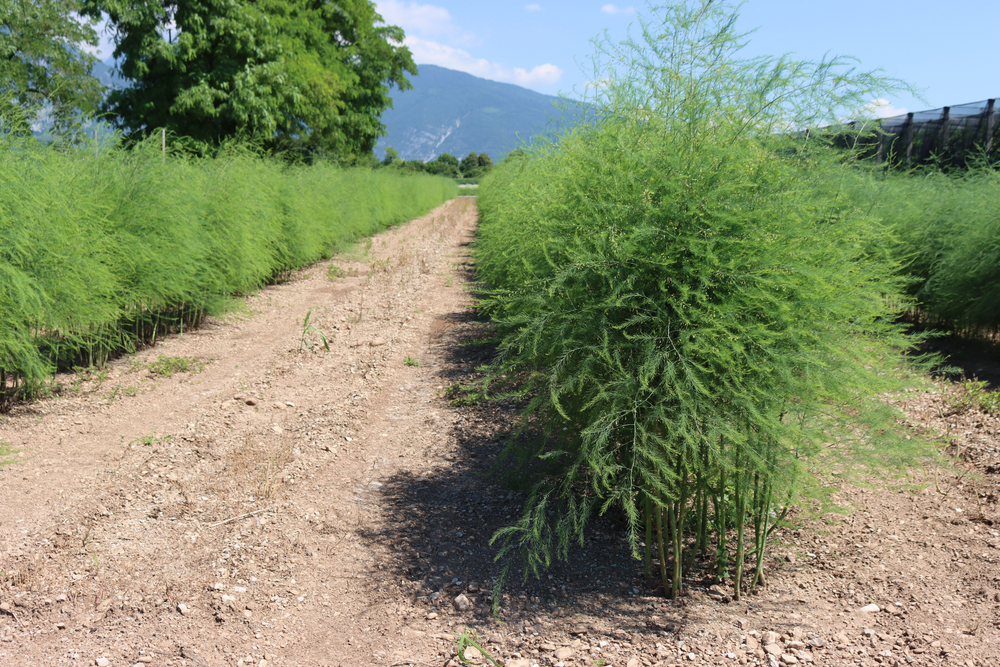
Asparagus is a perennial that takes a few years to establish but once it’s found a place in your garden, it can reward you for up to 30 years! Asparagus provides fiber, potassium, and vitamins A, C, and K, making it a great source of nutrition. Asparagus plants grown tall and have fern like foliage that is long and wispy. The asparagus spears grow up through the center of the ferns. Asparagus plants are either male or female. Females produce seeds and have a lower harvest, so many gardeners will focus their energy and efforts on separating out and producing males.
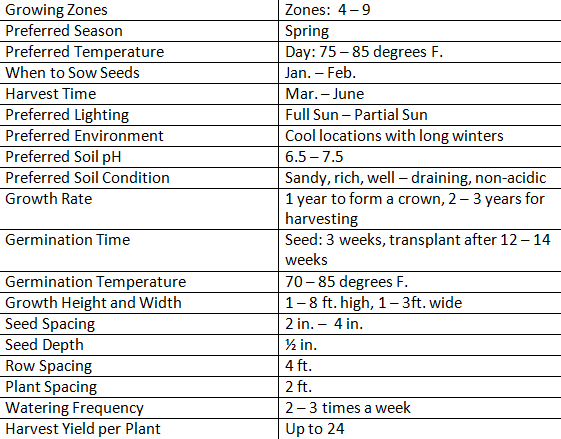
You can plant asparagus in the spring or in the fall, as it takes a few seasons to mature. Choose your location wisely. Asparagus plants can grow quite tall and you may or may not want other garden sections to be shaded by them. Give them a nice end or backside location, on the north or east side, of your garden area. Space your plants about 1 – 2 feet apart and provide them with well-draining, sandy soil, that is not acidic. An addition of lime may be necessary to achieve the correct pH level. Water consistently and regularly when rain is lacking, but don’t oversaturate. Provide fertilizer every few weeks. Asparagus can be grown in containers that are at minimum, 18 inches deep and 12 inches wide. The larger the container, the healthier the plant will be.
After two to three seasons your asparagus should start producing healthy asparagus spears. They will sprout in the spring up until early summer. Never harvest the first year, only harvest for a few weeks the second year, and by the third year your production rates will be optimal. Well established plants will produce for longer, about 2 months. Asparagus is a fast grower once established, so check your plants often for new spears. Cut the spears at ground level with a sharp clean knife or scissors when harvesting them. As the plants stop producing, the spears will become thinner. Stop harvesting when the spears are small. Asparagus tends to go bad fast, so it’s best to eat it within two or three days. Clean the asparagus and dry completely before storing.
In late fall/early winter, cut down dead foliage, and provide the soil with fresh compost and fertilizer. Cut down any dead ferns after all growth has died back. Never cut down the green ferns or plant stems. It is best to wait until they have completely died back for the season. The final step is to provide your asparagus with a layer of mulch. Any mulch will work that is weed free and provides the plant a thick insulting layer for winter. Straw and sawdust are good options.
Purple Spot creates purple lesions on the asparagus spears and will affect more than half of the spears. The ferns will also appear needle thin and may have brownish lesions. It’s caused by a fungus and can be treated with a fungicide.
Rust is caused by a fungus and causes the plants to have damage to the foliage. It causes the ferns and stems to turn yellow and eventually die if left untreated. Treat with fungicides and provide the plants with optimal space for good air circulation. Burn any debris and remove any diseased plants. Replace the soil. Choose disease resistant seeds and do not replant in the same area for a period of 4 years.
Drought Rot is more likely during long periods without rain. It causes yellowing of the plant stems and ferns, can lead to dampening off characteristics in seedlings, and can lead to crown death. The best way to prevent this is consistent watering through an irrigation system.
Wet Rot is more likely during long periods of rain. Spears will soften as they become water soaked. Water lesions can form on the crown. Yellowing of plant foliage will occur. To prevent this ensure your soil is well draining and apply fungicides.
Asparagus Aphids cause growth to become distorted and flowers to produce at the wrong times. Remove any host plants and treat with insecticide.
Asparagus Beetles feed on plant tissue and create damage along the stems that looks like shallow holes. They lay eggs on the ferns and are most present in the afternoon. Insecticidal treatments are effective.
Asparagus Miners are tiny flies that create damage by mining on newly planted asparagus and can lead to crown and root rot. Insecticide sprays can help prevent these bugs from wreaking havoc. Good winter care and garden hygiene can prevent it from forming.
Cutworms cut holes in the leaves and stems of the plant. Larvae can typically be found in the top few inches of soil. An organic pesticide can be used as a treatment.
Japanese Beetles will skeletonize plant foliage when feeding. Treat with insecticides if damage is severe.
Rose Chafer is a red legged small bug, that’s damage is typically seen on the flowers and ferns only. Grubs are in the soil and can be hand removed. Pheromone traps are effective, but if this bugs damage is minimal, it’s likely not necessary to treat them.
Yellow Striped Armyworms will occasionally be an issue. They like to feed on fern foliage. Parasitic nematodes and insecticides are effective treatments.

0 Comments