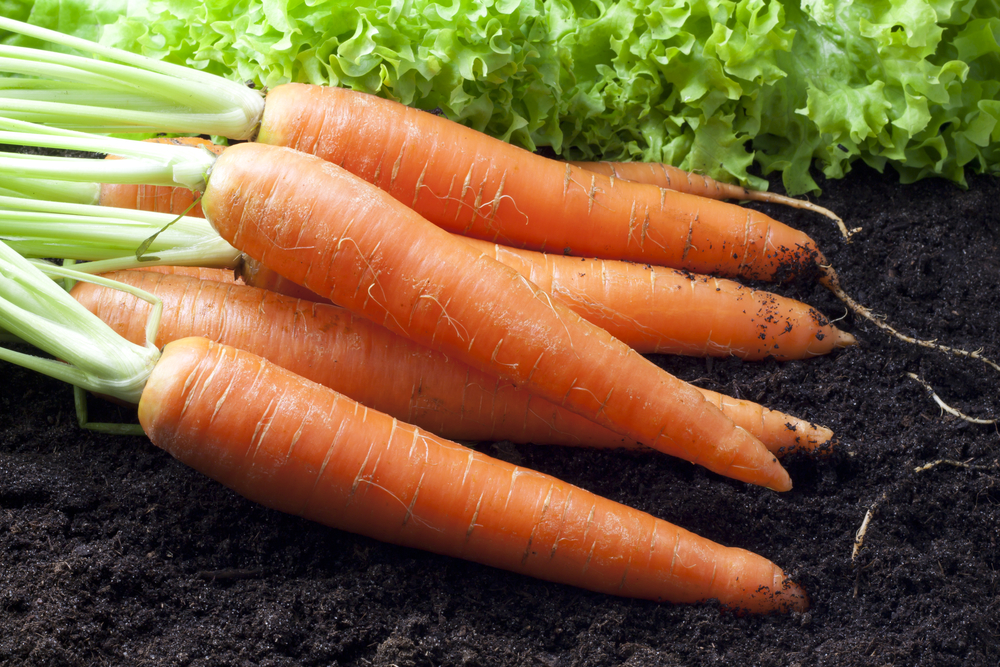
There are many different varieties of carrots to choose from and they range in shape, color, and size, so have fun with them! Try some varieties you have never grown before alongside your absolute favorites. Carrots are a great choice for the garden because they can be easily grown in containers, beds, or in the ground for a delicious harvest. Carrots are high in vitamin A, vitamin K, vitamin C, potassium, calcium, iron, fiber, beta-carotene, and even a bit of protein.
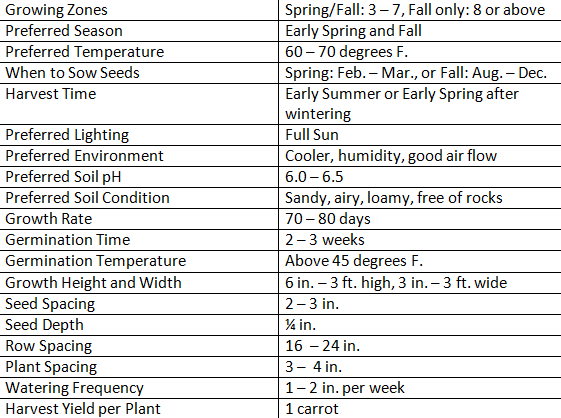
Sow seeds directly into their permanent location as they prefer not to be transplanted. Choose soil that is loamy and light, free of any rocks or debris that might misshape your carrots. This layer of soil should be about 12 inches deep. You can choose to use containers, raised beds, or an in ground garden design, depending on the number of carrots you would like to plant. Once your seedlings are 1 – 6 inches in size, move them 3 – 4 inches apart to give them room. Never let the soil get too hard or compact, and always try and keep it moist. After 5 – 6 weeks of growing, fertilize with potassium and phosphate. Water regularly and more often when plants are developing the roots and carrots.
Carrots grown in the winter should be kept in temperatures above freezing. Provide a type of light weight mulch, like straw and cover with row covers. Carrots will grow slower in the winter but should survive at close to freezing temperatures with the right care.
Harvest carrots when they reach their mature size. This varies depending on the variety. Before the heat of summer sets in it is best to harvest if they are close to maturity. Dig up carrots, and cut the plant tops off down to a ½ inch from the top of the carrot. Rinse the carrots thoroughly and air dry. Carrots can be stored longer term in sand or sawdust in a cool location, like a cellar or basement. To refrigerate, ensure they are completely dry and store in an air tight container or bag.
Aster Yellow Disease causes foliage yellowing, slow growth, and deformation. It can cause shoots to grow on the carrots, and lowers the quality of the yield and taste of the carrots. It is transferred by the insect leafhoppers. Treat with insecticides early in the season to try and prevent the spread of the disease and keep host plants away from other garden plants.
Black Canker causes superficial black or brown lesions on the carrots and it is caused by a pathogen. Roots and stems can both be affected. It is possible it will overwinter and spread by wind. Planting disease resistant varieties, crop rotation, and prevention of the carrot rust fly, are the best ways to prevent it. Remove all host plants and soil that is infected. Fungicides are ineffective.
Carrot Rust Flies like to lay eggs at the crown of the plant and their larvae feed on the roots creating damage that accumulates over time. Insecticides and sticky traps are the most common tools used to prevent them. Crop rotation and row covers are also good deterrents.
Flea Beetles are tiny beetles that create sporadic holes in the leaves. They can spread diseases like wilt and blight. To treat for flea beetles, you can use insecticidal soap, an early season insecticide, talcum powder, or sticky traps. All these options will reduce their numbers and damage.
Wireworms turn into click beetles. They are click beetle larvae, small tannish colored worms, and are found in the soil. They like to feed on roots and plant stems, and bore into the carrots. The best solution to wire worms is to create a trap with a fully grown carrot or potato that is placed in the soil a few feet away from your garden area. Every few days pull it up and remove any worms. Repeat as necessary and replace the potato or carrot if it starts to rot.

0 Comments