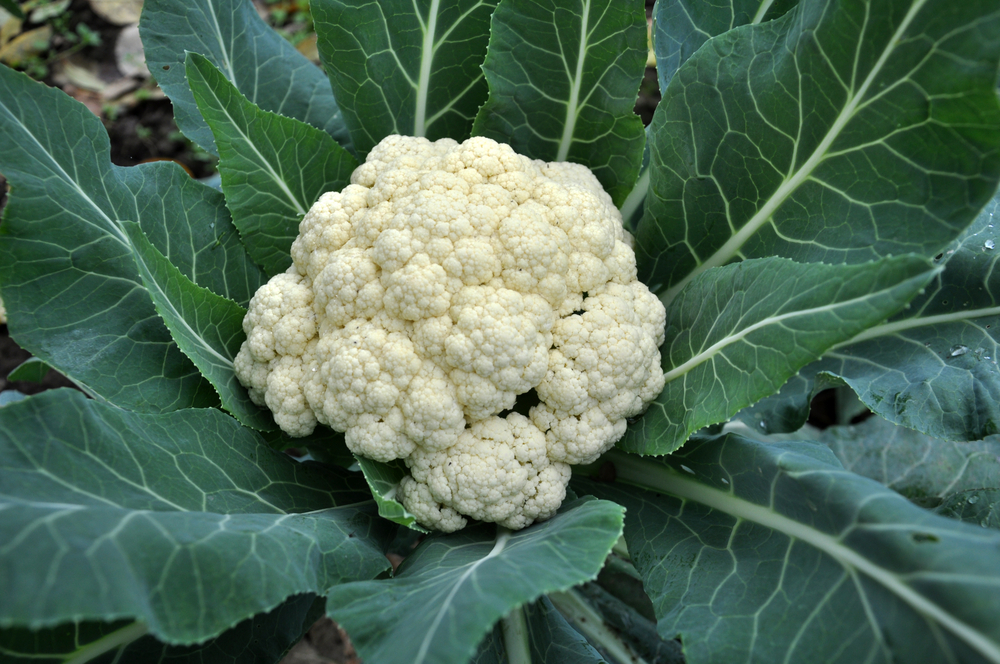
Cauliflower is a more tender plant to grow as it requires consistency in temperatures and weather. It will not tolerate temperatures that are too hot or too cold. The environmental conditions need to remain consistent for optimal success. Although a challenge, cauliflower can add a great source of fiber and vitamins to your garden and diet. Cauliflower is used in many dishes around the world and has a mild flavor making it very versatile in the kitchen.
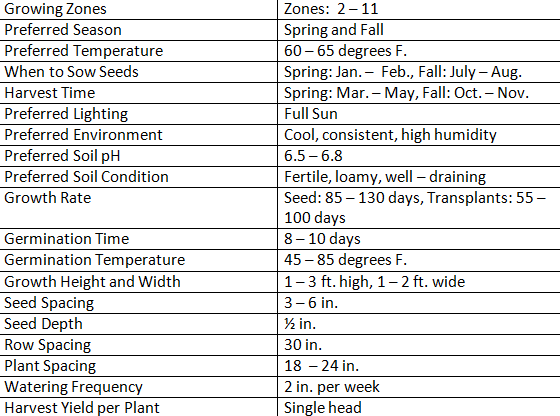
Use very rich soil for cauliflower by adding compost, manure, and 5 -10 -10 fertilizer. Sow seeds in rows that are 3 – 6 in. apart and ½ in. deep. Water consistently and often. Transplant a few weeks before the last frost, for a spring planting, and well before the first expected frost, for a fall planting. Protect the plants with covers, clear containers, pots, or milk jugs at night, to prevent the cauliflower from getting too cold. For fall plantings, keep plants shaded from any late summer heat. Mulch will help the cauliflower plants to retain moisture.
To care for your cauliflower try to keep the environmental conditions consistent. Water often, even with rainfall. Fertilize once a month with nitrogen. If the heads start to turn brown add some borax to a gallon of water and water the plants with the mixture. If you notice pink coloring, they may need less sun and a less stressful environment.
When the head of the cauliflower turns all the way white and is firm, it is ready to harvest. They should be about 6 – 8 inches in size and can be cut from the plant with a knife leaving some leaves around the head. If heads seem too small but are opening, they should be harvested. Any course looking cauliflower heads, should be tossed, as they are past their desired maturity level.
Black Rot creates dull yellowing at leaf margins, blackening of veins, and soft rotting symptoms. It is caused by bacteria that are transferred from infected soil, transplants, or seeds. Hot, humid, rainy environments encourage its spread. Start with disease free transplants or seeds, and practice good hygiene while handling the plants, to help prevent it. Once present, black rot is not preventable. Cooper treatments before presence can be beneficial.
Clubroot causes the plant roots to become mangled and misshapen. It is a fungal disease that causes the plants to quickly wilt and die. Remove any infected plants. Sterilize the soil and raise the pH to 7.2, to prevent the fungus from spreading to the other plants nearby.
Powdery Mildew causes a white, powdery growth to form on the plant leaves and can lead to discoloration and lower harvest yields. It is managed best with fungicide, applied regularly.
White Rust appears as white spore patches on the undersides of the plants leaves and can affect a number of vegetable plant types. Treat with fungicide regularly to prevent and rotate crops. It can harbor overwinter.
Aphid nymphs and adults like to suck on plant juices, attack plant leaves, stems, buds, flowers, fruits, and the roots of many vegetable plants, including cauliflower. To find them, look for misshaped, curling, or yellowing leaves. Look for tiny eggs on the undersides of leaves. They can be one of many colors, such as, white, tan, red, yellow, brown, or black. Aphids are tiny and usually cover large portions of the leaves and stems. To prevent them, you can plant companion plants such as herbs that may deter or distract them. You can try and knock them off by spraying the plants thoroughly with water. Neem oil, insect soaps, cayenne pepper spray, a dusting of flour, and Diatomaceous Earth are all effective against aphids.
Cabbage Loopers are small green caterpillars that feed on plants at night. If minor, handpick them off the plants leaves and stems. If consistently a problem, use Bacillus thuringiensis (Bt) to treat for them. It is a natural pesticide that specifically targets a variety of caterpillars.
Cabbage Root Maggots feed heavily on roots and clump together in groups. They are small, white, legless maggots. It is the baby of a cabbage fly. Cabbage flies emerge in spring and lay eggs near the base of plant stems. Larvae hatch and burrow into the soil to feed on roots. After feeding, they mature into the pupae stage and turn a brownish red color. Soon cabbage root fly adults will emerge. Without treatment the plant will die. If and when you find eggs remove and destroy them. Check roots for maggots and remove with a heavy rinse of water before replanting in fresh soil. Sticky traps, predatory nematodes or wasps, can be effective preventatives.
Cabbage Worms become small white butterflies. They are very small little caterpillars with a yellow stripe and often lay eggs on your plants. They create heavy feeding damage on leaves in the form of irregular holes and can leave a stem leafless. Sticky traps and regular treatments of Bacillus thuringiensis (Bt) are effective preventatives.
Stink Bugs will lay eggs on the undersides of leaves that are silver. The nymphs are tiny, red, with black lines on their back. They will feed on most vegetable plants and the adults which are either green or brown will hide within plant foliage. They will pierce and suck on stems and fruit, and some can spread disease this way. To prevent them, till overwinter and keep the area debris free. Handpick as you see them, set out soapy water traps, keep an eye out for eggs, use covers to protect your plants from insects, and treat any nymphs with insect soap or neem oil (not effective on adults).
Thrips are tiny thin flying insects that like to suck and feed on plants and lay eggs on leaves. It is possible for them to spread viruses, so it’s important to look out for them. A few treatments of insecticidal soap can stop smaller infestations. Keeping plants covered with insect drapes and sticky traps, are helpful preventatives.

0 Comments