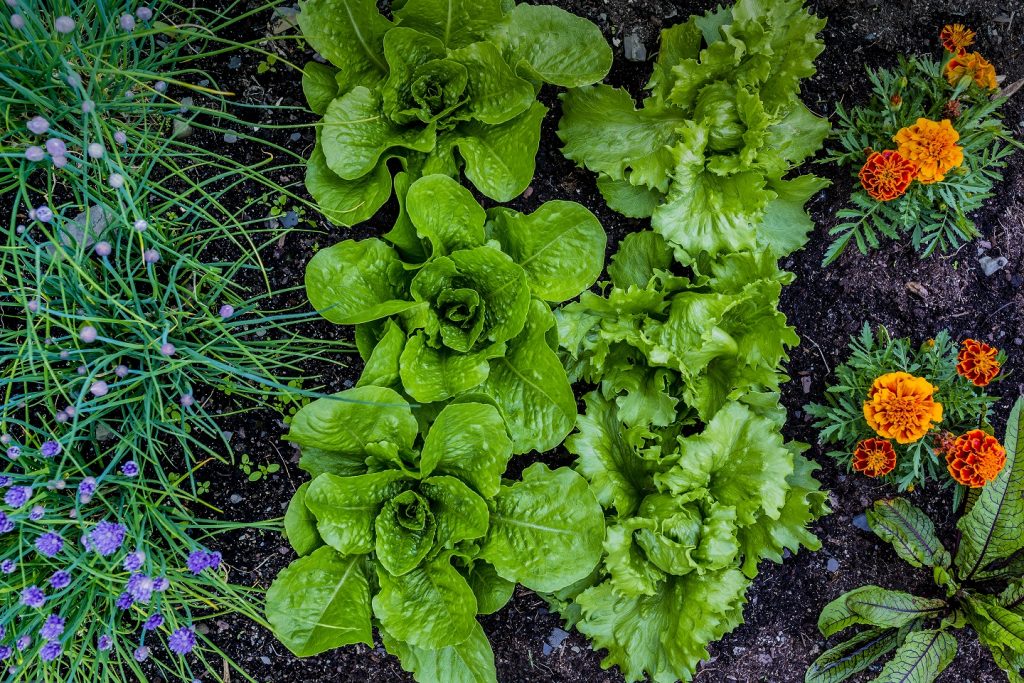
Companion Planting is a great tip for vegetable gardens because it has so many benefits. It makes it easier for you to care for your plants if they are positioned based on their care and needs. When placed together, some plants make great partners by deterring common pests and diseases. Taller plants can provide shorter plants shade on their leaves. Shorter plants can provide the ground with a cover preventing weeds and ensuring taller plants stay moist. Plants were created to work in unison and we can take advantage of their amazing ability to care for each other.
Basil – pairs perfectly with tomato, peppers, and radishes.
Beans – are friends with most, but don’t really like garlic, onions, or peppers.
Cabbage – is also very social, but has a cold shoulder towards, broccoli, strawberries, and tomatoes.
Carrots – pair well with radish, celery, sage, and tomatoes, prefering to avoid dill and parsley.
Corn – has only one enemy, and that’s tomatoes.
Cucumber – makes a great partner to many, but is not a fan of strong herbs, melons, or potatoes.
Lettuce – loves a dappled shade spot behind a vine climber, but tends to compete with broccoli.
Onions – are a good friend with almost all, it only dislikes beans, peas, and sage.
Peppers – pretty much like everyone except beans. Separate pepper types from each other.
Potatoes – are choosy about their friends. They like beans, cabbage, corn, and lettuce, but they shouldn’t be paired with tomatoes or cucumbers.
Tomatoes – have many good companions but broccoli, corn, kale, and potatoes are not good with them.
Apples – make a great companion with chives, garlic, leeks, strawberries, and many herbs.
Apricot – is friends with a few herbs like, anise, basil, chives, and dill, but doesn’t like broccoli, cabbage, cauliflower, turnips, collards, tomato, potato, or eggplant.
Blackberry, Raspberry, and Blueberry – are good pals of garlic, marigolds, zinnias, berry plants and other fruits that flower at similar times, as well as, a few herbs like cilantro and dill.
Cherry – does well with garlic, onion, and bee attracting flowers.
Grapes – pair nicely with many flowers and herbs, chives, garlic, onion, and blackberries.
Pear – loves garlic, lavender, and a variety of mints.
Peach and Plum– pair well with chives, garlic, onion, and strawberries.
Strawberry – is a good with onion, beans, lettuce, spinach, peas, and thyme. It does not like, broccoli, cabbage, cauliflower, turnips, or collards.
Companion planting is a good way to ensure you have a successful garden without a lot of stress. Your plants will be healthier, will produce higher yields, it will be easier to care for them, and you will be less likely to run into issues. Combining flowering plants and herbs that attract beneficial insects with your veggie and fruit gardens will create the perfect garden environment and add to its beauty. Before you start your garden, consider which companions will be best next to each other. Then create a plan or diagram, to help map it out. This is one of the most useful tips for new home gardeners.

0 Comments