Home gardening designs are all different and designed with the gardeners needs in mind. Each garden is different, unique, and entirely the owners to create.
A few major things to consider for your garden design are your location, amount of space, weather, lighting, your budget, possible trouble makers, what your desires are, and companion planting opportunities.
Location and space are the first consideration because some people have a large amount of land and can garden in lots of areas on their property while other home gardeners may be restricted to one certain area or a limited few. This will impact the types of designs that you can create. I chose to use containers my first year so I could move them around and determine which locations were best for each plant before I put anything in the ground.
Your weather and amount of lighting is also another important factor for garden design planning. How much sun does your area or areas get each day? Most fruits and vegetables are full sun requiring plants. When it rains where does the water flow and drip from? Is it right near your area or areas? If so, that needs to be considered and planned for too.
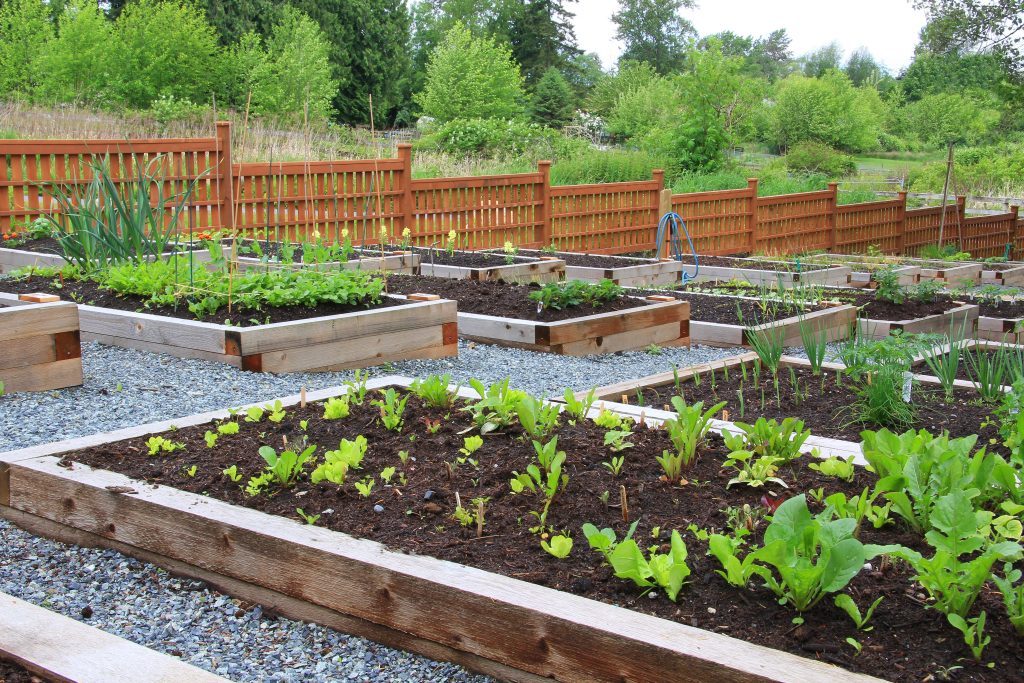
Your budget will affect what products and designs you can afford. For example, I would love to have a raised bed garden like the one pictured above, with at least six beds in it, that is fenced in, in the middle of my yard, but that’s not really in my budget right now. Containers were my most affordable option and fit well into my limited garden areas.
Your possible troublemakers; animals, pests, and diseases are good considerations because you will need a line of defense. A fence, nets, sound deterrents, or sprays are some options available. What will your defense look like and how does that affect your design plans?
The type of gardening you want to do – container or pots, raised beds, in ground rows, or spiral (I’m sure there are more) is an important consideration. How do you want to garden now and in the future? I started with containers with plans to move to raised beds in a few years. I find the spiral gardens intriguing and may fit one of those into may garden at some point too!
When you start planting your garden it’s a great idea to plan your plant placement based on what will be next to it This is called companion planting . Some plants make great companions while others do not react so well to each other. For example, tomatoes, and cucumbers grow great next to each other but tomatoes and cabbage do not. Certain plants can spread communal diseases so separation may be necessary depending on what plants your growing.
There is a lot to think about when it comes to choosing a garden design and which one is right for you and your needs. You can always switch designs if you don’t like something so don’t hesitate to try one! Planning ahead before diving in will ensure your garden turns out beautiful.

0 Comments