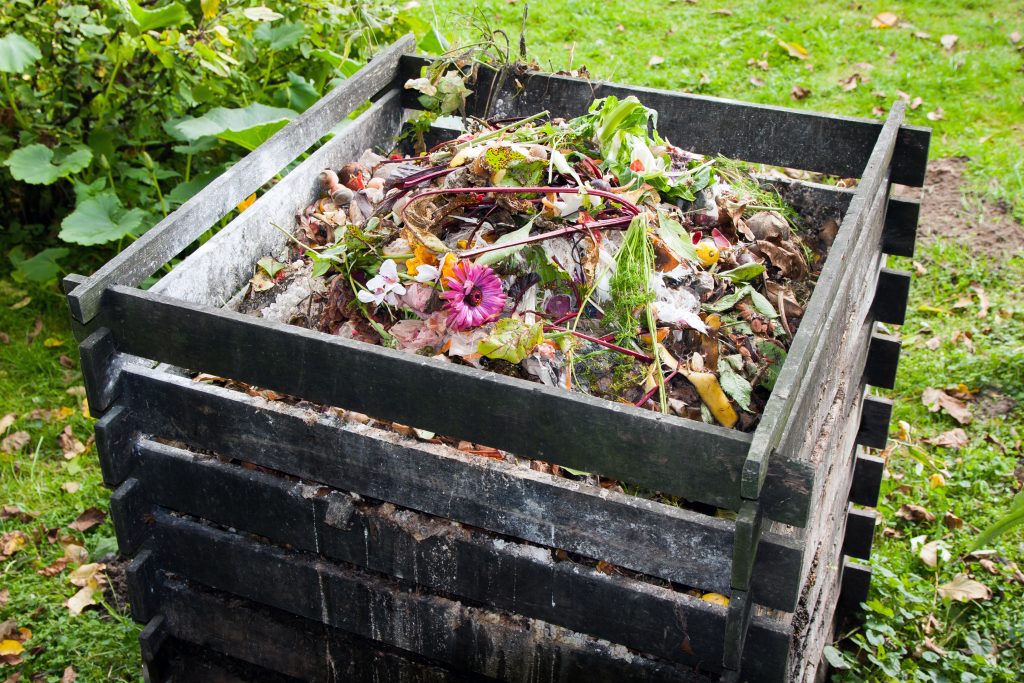
Composting is very beneficial for your garden and the environment. It is also nice for your wallet when you are required to buy less soil because you are making your own! Making your own compost and using it in the garden will improve the health of your plants and harvests, will lower the amount of trash going into the landfill, and can improve soil by adding healthy nutrients it might be lacking. Compost can add moisture retention or help with drainage depending on what soil it is mixed with. This makes it a great soil conditioner for most types of soil.
The first step to composting is determining how you want to compost and where. Some people build a compost bin or purchase one, and others chose to compost more freely in yard piles. Most people in urban settings choose to compost in bins because it is tidy and easier to control and manage. Composting freely is a more common choice when there is larger property, less neighbors, and larger gardening areas to cover. There are a variety of ways to compost, and a few are described below. Outdoor methods are either hot or cold types.
Hot composting is active which means its heat destroys weed seeds and many harmful bacteria and diseases. 3 ft. by 4 ft. piles are best and consist of two parts high carbon materials (wood, leaves, stems) and one part high nitrogen materials (green plants, grass clippings, etc.) combined with soil. These ingredients are regularly turned, soaked with water periodically, and air hole punctured. It requires more effort, but you get fresh compost faster and it is less likely to contain weeds or harmful bacteria or diseases. The more often you turn the pile, the faster your compost will mature.
Cold Composting is more passive, and the same ingredients are used that are used for hot composting, but you don’t have to turn it as often as you do when hot composting. It will decay gradually and is a much slower process. When cold composting weeds are not destroyed and should not be included. Any composting materials that may contain harmful bacteria or plants with disease should also be excluded.
Worm composting is also called vermicompost. The worms break down the compost food scraps and other materials and turn it into a rich compost. This method is easy to start, only requiring a covered bin that allows air in, moist newspaper scraps, and worms. Then, plant-based food scraps are buried under the newspaper bedding and a fresh dry piece of newspaper is added to the top. This is repeated until enough compost is produced at the bottom of the pile.
The Three Section method is a turning method and design. It puts three sections side by side so that as the compost materials are turned, the compost moves to a new section. All ingredients start in the end section. These materials are moved to the middle section when it has partially degraded. Then the materials are moved to the third section to fully degrade. Each time the materials are turned they are moved to a new section. Each section should be a size of 3 ft. by 5 ft. for optimal degrading.
Compost Tumblers can be do it yourself designed or store bought. The basic design is a bin on a stand that is closed and dark, with air holes. It has a turn or crank like handle to tumble the bin around in a circle motion. They were created to help with the turning process of composting which can feel like a chore. The method and ingredients of these are the same as regular composting it is just easier and more convenient. These are well suited for city dwellers and people with limited space and less need for large amounts of compost. The bins are not very large and can only create a limited amount.
The 3 MAIN STEPS to composting are:
1. Start a pile with soil, plant matter, and yard debris like grass clippings. Add plant-based matter and other compostable items.
2. When Hot composting, turn the pile regularly, usually once a week or more. The more you turn it the faster it will decay. Cold composting doesn’t require turning as often.
3. After a few months to a year (if cold composting) you should start to have a decent amount of compost. Keep piles moist and airy.
THINGS TO INCLUDE:
Coffee grounds or tea grounds
Dry goods like flour or crackers
Egg Shells
Hair
News Paper or Shredded Paper
Toilet rolls and cardboard
Nutshells
Seaweed
Uncooked or Cooked Pasta
Composting seems intimidating but its really not and it’s a great step we can all take to improve the environment. Plus, your garden will absolutely love it! Compost is the best thing you can provide any garden. If you want more information on composting and how to start, Eartheasy has a great guide on how to get started with tips for success and tables that compare common composting materials and their benefits.

0 Comments