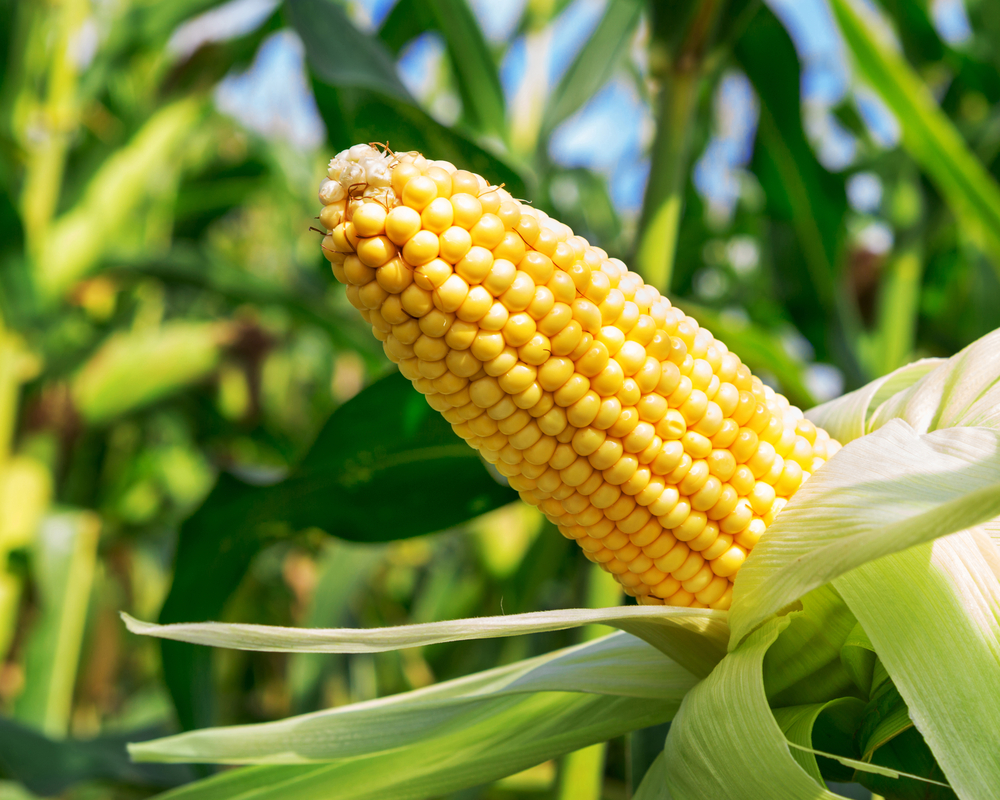
Corn is an annual summer crop that comes in a variety of colors and types. It can be grown in-ground, in a raised bed, or in deep containers. Corn is a great addition to any garden because it is very nutritious and easy to grow. Corn is high in fiber, folate, thiamin, phosphorous, vitamin C, and magnesium. It can be grilled, baked, fried, sautéed, chilled, or canned. It is highly versatile in the kitchen and adds a splash of sweetness to your dishes. Corn can provide much needed shade for other vegetables, so it makes a great companion in the garden.

Soon after your last spring frost, in April or May, plant your corn seeds outdoors. If the ground is still cold, use landscaping fabric over the soil to keep the ground warmer. Plant the corn by creating small holes in the fabric. Plan for transplant spacing by keeping the holes about a foot apart. After planting your seeds or transplants in the holes, cover the landscaping fabric with a natural mulch or hay. Water deeply. Corn should be watered every few days unless there is constant rain. An irrigation system may be useful. Planting in blocks of four rather than in rows will help the corn to pollinate.
Your corn will show signs it is ready to harvest when the tops of the plants start to brown, the cobs swell, and the kernels look full. Pull the ears down and twist them until they come off. Eat while the corn is still fresh for the best taste. Freeze or can the corn to store longer term.
Anthracnose spreads in the air and in water. It is a fungus that causes die back of leaves and appears as small watery round spots at first. Over time, this causes the tops of the plant to appear to die back, while the bottom of the plant still looks healthy. Once it reaches the plants roots, it will cause them to rot. This fungus loves wet, warm, cloudy weather, and can overwinter in soil. Choosing disease resistant varieties, practicing good crop rotation methods, and using fungicides early in the season, can help prevent it.
Eye Spot causes water soaked circular spots to develop on foliage, especially older lower leaves. It is common in weather that is wet and cold. The spots grow larger over time and develop a halo in the center. It can lead to loss of plant life and may lead to rotting symptoms. The best resistance is prevention. Choose disease resistant varieties, practice good crop rotation, and apply fungicide regularly.
Gray Leaf Spot is more likely to develop in hot, humid weather. The lesions have a more rectangular shape with a circle in the center. They are tan and white in color. This fungus spreads from the lower leaves upward and will likely lead to stalk rot. Similar to eyespot, the best resistance is prevention. Choose disease resistant varieties, practice good crop rotation, and apply fungicide regularly.
Northern Corn Leaf Blight is a fungus that spreads through crop debris. The lesions are tan, vary in size and shape, and appear smooth and round on the edges. Spores will spread in humid conditions. It will damage the plants ability to take in nutrients and overtime will lead to yield loss. To prevent, plant disease resistant varieties, practice crop rotation, and apply fungicide regularly.
Rust is a rust colored fungus that prefers, cool humid climates. Leaves will present with rust colored fungus that spreads until the whole leaf is infected on both sides. To prevent, plant disease resistant varieties, and use a fungicide regularly.
Southern Corn Leaf Blight is caused by a fungus and can be devastating to a crop of corn that is one type and susceptible. It will lead to broken stalks, wilted plants, and rotten corn with a gray fungus on their surface. To prevent it, choose disease resistant varieties, plant more than one kind of corn, rotate crops, and use fungicides regularly.
Corn Earworms are small caterpillars that turn into moths. They attack the corn cobs and cause damage to leaves in the form of small holes. In the moth stage they will fly to other plants and lay eggs. They are a common pest and hard to manage in high infestations. Insecticides applied regularly and applications of Bacillus thuringiensis (Bt) regularly, can lower their numbers and lower yield losses.
Cucumber Beetles come in different types. The striped cucumber beetle loves to feast on the fruits of your labor, while the spotted varieties will pretty much eat anything and more types of plants than the stripped beetles. Besides causing damage to your plants these beetles can also spread diseases. To prevent them, use sticky traps, hand pick or create traps for them, companion plant with plants that deter them, try row covers, and use an organic insecticide.

0 Comments