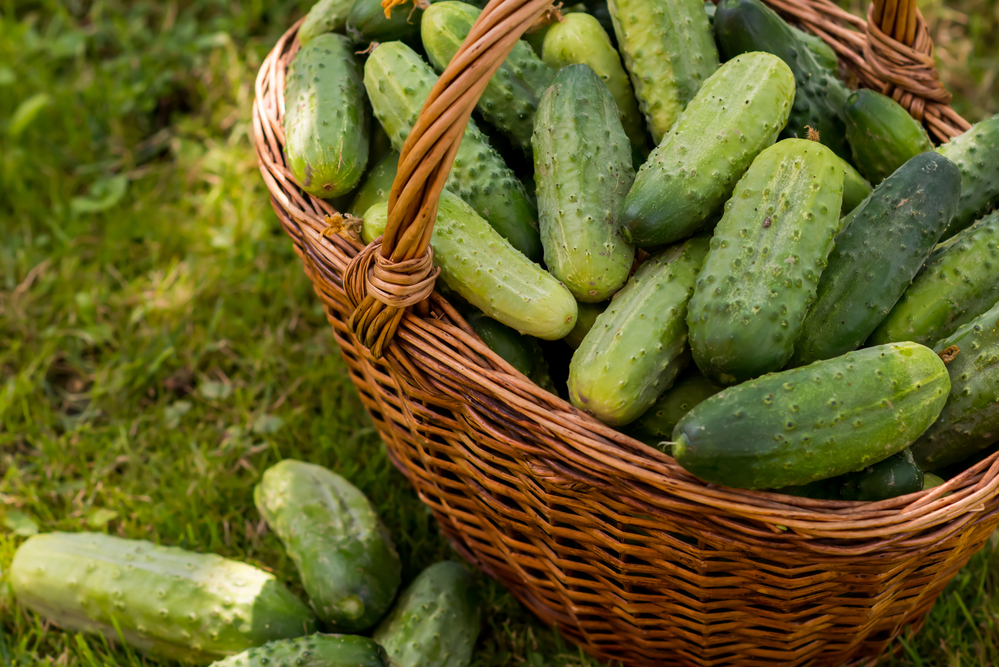
Cucumbers are easy to grow and please. There are two kinds of cucumber plants; the type that vine and the type that bush. Both types can be grown in the ground, in raised beds, or in containers. Vining cucumbers will require a trellis or extra support. Cucumbers are a great addition to the garden because they produce consistently if planted in succession, produce fast, and provide a nice burst of color with their yellow flowers. Cucumbers are great for your diet, because they are high in a variety of vitamins and minerals, and very low in calories.

Plant cucumber seeds directly outdoors about an inch deep and 1 – 2 ft. apart. For vining plants, install a trellis for support. Create small mounds, plant 2 – 3 seeds in each mound, thinning them out when they reach 4 in. tall. Use mulch, such as, straw or leaves, to keep the plants and fruits off the soil, and to retain soil moisture. Cover with row covers or netting, to prevent pests and diseases.
Cucumbers need to be watered often. Keep the soil consistently moist. Never water cucumbers overhead. Water slowly at the plants base, in the morning or early afternoon. This will prevent diseases from spreading. Drip irrigation is a good solution.
When fertilizing, look for a low nitrogen/high potassium and phosphorous mix. Apply when you plant, a week after the first bloom, and then once a month thereafter. Over fertilizing can stunt growth so consistency is important.
It’s best to pick your cucumbers before they become too large for the best flavor. Cucumber sizes vary depending on type. Regular cucumbers grow to be about 6 – 8 inches long, dills are 4 – 6 inches long, pickling are 2 – 3 inches long, and burpless can be 10 inches long before they are mature enough for harvest. Avoid letting them turn yellow, this means they are past ripeness. Cut or twist the fruits stem to pick, avoid pulling. Pick them every few days as necessary to keep the plants producing.
Powdery Mildew causes a white, powdery growth to form on the plant leaves and can lead to discoloration and lower harvest yields. It is managed best with fungicide, applied regularly.
Aphid nymphs and adults like to suck on plant juices, attack plant leaves, stems, buds, flowers, fruits, and the roots of many vegetable plants, including cucumbers. To find them look for misshaped, curling, or yellowing leaves. Look for tiny eggs on the undersides of leaves. They can be one of many colors, such as, white, tan, red, yellow, brown, or black. They are tiny and usually cover large portions of the leaves and stems. To prevent them, you can plant companion plants such as herbs that may deter or distract them. You can try and knock them off by spraying the plants thoroughly with water. Neem oil, insect soaps, cayenne pepper spray, a dusting of flour, and Diatomaceous Earth are all effective against aphids.
Cucumber Beetles come in different types. The striped cucumber beetle loves to feast on the fruits of your labor, while the spotted varieties will pretty much eat anything and more types of plants than the stripped beetles. Besides causing damage to your plants these beetles can also spread diseases. To prevent them, use sticky traps, hand pick, or create traps for them, companion plant with plants that deter them, try row covers, and use a insecticide if it is specifically made for use on cucurbits, as they are sensitive.
Squash Bugs look a bit like stink bugs and are larger bugs with a gray or brown body. They tend to group on the undersides of leaves and lay eggs. They cause damage to leaves, stems, and vines, when feeding and can destroy a smaller plant. To prevent them, try to detect them early by removing any eggs and destroying them, setting traps for the adults, and using insecticides if necessary.

0 Comments