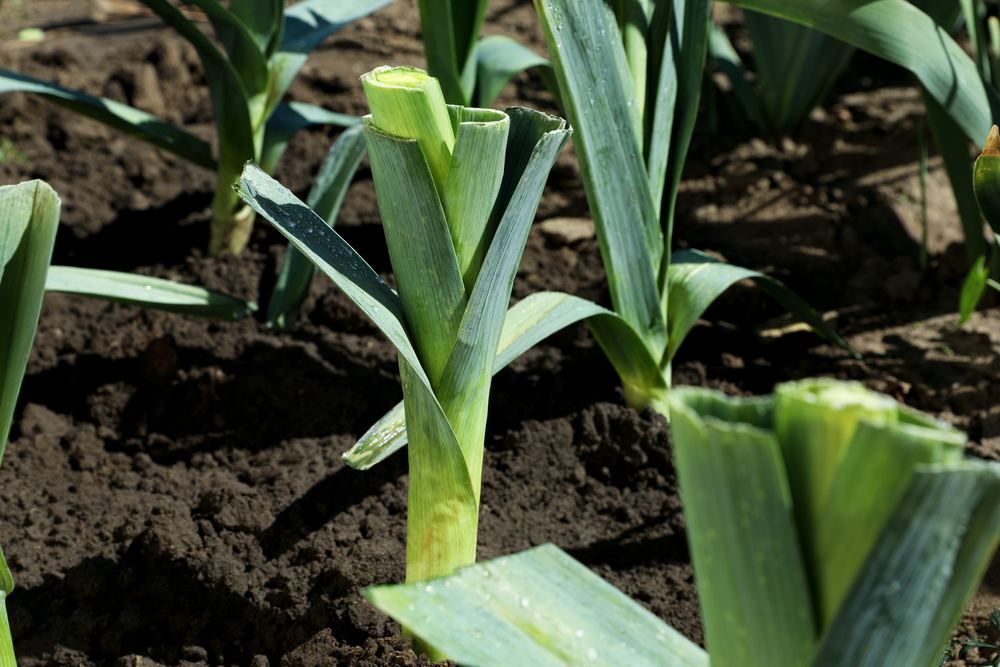
 Leeks are similar to green onions and shallots but with a milder sweeter flavor. They are often used in casseroles, soups, stews, stir-fry, or as a simple garnish. Wild leeks, native in North America, are called Ramps, and have a stronger garlic flavor. Leeks are high in a variety of vitamins and minerals that are excellent for health, such as, iron, manganese, and fiber. Leeks require a long growing season so start from seed early. They are biennials but are often grown as annuals depending on location.
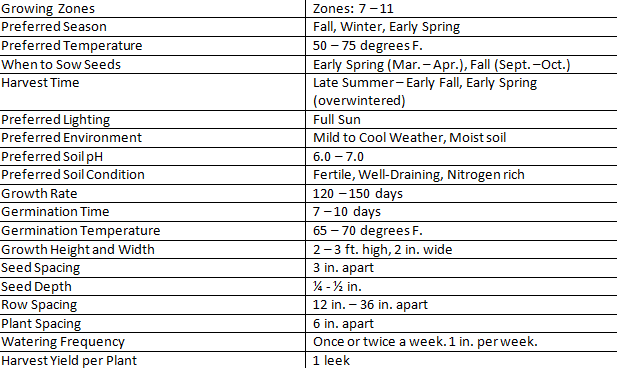
Sow seeds for leeks in early spring around March for a late summer/fall harvest. Sow seeds in late fall for an early spring harvest (zones 7 and above). Plant seeds in loamy well-draining soil, in containers, raised beds, or in the ground. Sow seeds directly into the soil only about a ¼ in. down. Spread the seeds and cover lightly with soil. When seedlings are ready, move them to be 6 in. apart and a few in. deep to encourage good airflow and growth. Water the leeks a few times a week when necessary but not too often because they don’t like soil that is soggy. Choose a full sun location with at least 8 hours a day.
Leeks can be harvested early around finger size for a smaller more mild and tender leek that tastes great in salads and soups. Once the stem width is over 1 in. leeks are mature and ready for harvesting. Gently pull or dig out the leek plant. A quality leek will be about 3 in. long or more and appear elongated and white. Bulging at the base of the leek is not desired. Leek stems do not die back like onions when mature. The leek stems should be a nice dark blue green color. Trim the leeks stems, and clean the whole leek well before storing. Full harvesting can be delayed until a few frosts have passed since leeks are frost tolerant. Leeks can be overwintered in warmer locations, zones 7 or above.
Leek Rust is a common fungal disease. Causes orange, raised, leaf spots. It’s common in mid–summer through late fall. Do not over fertilize with nitrogen, do not crowd plants, remove all weeds regularly, and plant debris when harvesting.
Powdery Mildew causes a white, powdery growth to form on plant leaves and can lead to discoloration and lower harvest yields. It is managed best with fungicide, applied regularly. Neem oil and Potassium Bicarbonate are good options.
Purple blotch is a disease caused by a fungus that affects the tops and bulbs of leek plants. The disease is more common in the Midwest. The fungus overwinters in crop debris and is spread by wind and rain in the spring. Tan spots will appear on leaves that will sink and expand at a rapid pace up and down the plant. Eventually, the tops of the plant will collapse. Crop rotation and protective fungicides are the best prevention of purple blotch.
Thrips are tiny thin flying insects that like to suck and feed on plants, and lay eggs on leaves. It is possible for them to spread viruses so it’s important to look out for them. A few treatments of insecticidal soap can stop smaller infestations. Keeping plants covered with insect drapes and sticky traps are helpful preventatives.
Leek Moths like the feed on the leeks stems stunting plant growth and damaging foliage. They are common pests to onions, leeks, and garlic and can destroy a whole crop worth of plants in a short period of time. Cover with insect proof nets at night, and spray with Bacillus thuringiensis (Bt), an organic pesticide, to control and prevent moth damage.

0 Comments