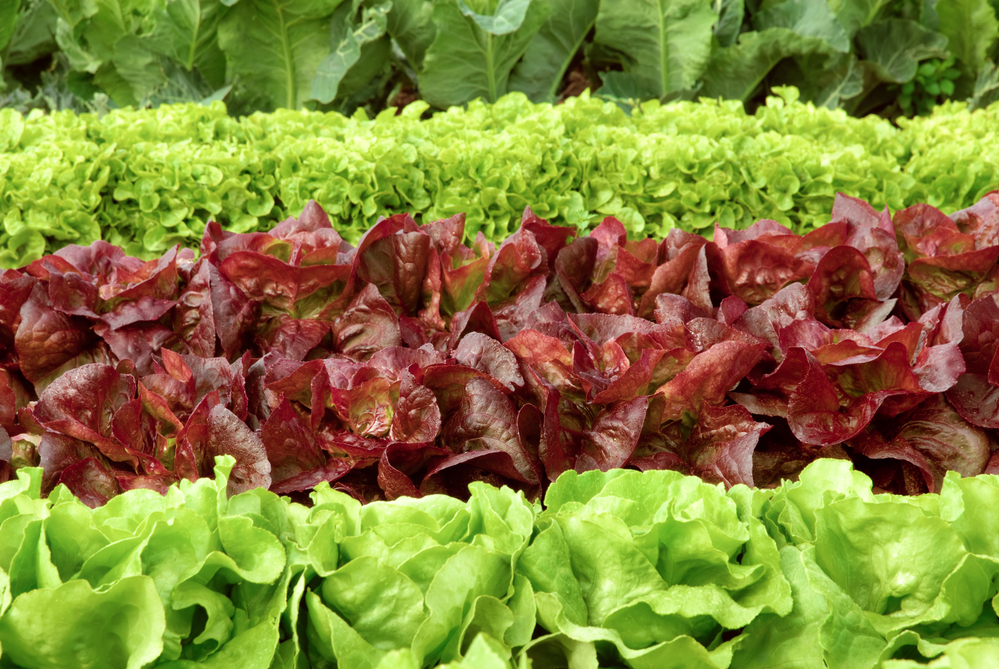
Lettuce is a great choice for the garden because it is such an easy grower! It does well in spring and fall giving you more than one crop each year. If you sow seeds every few weeks you can have your own lettuce for salads from spring through fall. Lettuce comes in lots of different varieties, shapes, and sizes, so it’s hard to get bored with this veggie. Lettuce is full of vitamins and minerals such as vitamins A, C, K, potassium, calcium, magnesium, and iron. Lettuce is also a visually appealing plant to grow in the garden because its rich green foliage adds texture and dimension that can be rather beautiful. Butter Crunch and Romaine are my personal favorites to grow.
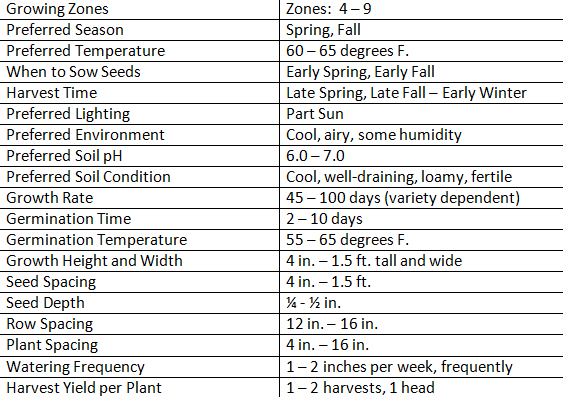
In Spring, select a sunny location that is weed free with fertile soil for your lettuce seeds. Start your seeds indoors, about a month to a month and a half, before your last spring frost date. Once the soil temperature is over 40°F seeds can be sowed outdoors. When your lettuce has a good set of true leaves, thin them out, and separate them to 4 in. or more depending on the type. Water the lettuce thoroughly when planting and consistently thereafter. Companion planting in-between with Chives or Garlic can lower aphid levels.
For a fall or winter crop, plant lettuce seeds in late summer 6 – 8 weeks before expected frosts. Fertilize about a month after planting with a fertilizer rich in nutrients and nitrogen. Straw mulching will conserve soil temperatures and suppress weeds in the lettuce area. Sow seeds every two weeks for continuous harvests. To keep lettuce warmer in colder months, cover with clear plastic sheets or containers.
Lettuce should be harvested when the leaves are still somewhat young and tender, almost full size. Remove outer leaves as needed for salads or cut the plant about an inch above the soil for a continuous harvest. Dig up the whole plant for a one time harvest. Once lettuce matures, it becomes bitter, so check your lettuce regularly and harvest often. Lettuce can be stored in the refrigerator for 10 -14 days in a plastic bag wrapped in a damp paper towel. This keeps the lettuce crispy longer.
Common Diseases
White Mold is the fungus and can appear on many parts of the plant. Plants will wilt and die off slowly and patches of white mold will appear. It can reduce harvest amounts. To prevent spreading, destroy any infected plants and remove any infected mulch or soil from the growing area. Water at the plants bases, not overhead, and control weeds in the area. Use fungicides if necessary and do not allow the mold to overwinter In the soil or garden areas.
Common Pests
Aphid nymphs and adults like to suck on plant juices, attack plant leaves, stems, buds, flowers, fruits, and the roots of many vegetable plants. To find them, look for misshaped, curling, or yellowing leaves. Look for tiny eggs on the undersides of leaves. They can be one of many colors, such as, white, tan, red, yellow, brown, or black. They are tiny and usually cover large portions of the leaves and stems. To prevent them, you can plant companion plants, such as, herbs that may deter or distract them. You can try and knock them off by spraying the plants thoroughly with water. Neem oil, insect soaps, cayenne pepper spray, a dusting of flour, and Diatomaceous Earth are all effective against aphids.
Earwigs love moist, humid, dark environments. They have little pinchers on one end and are ancient creepers. Their damage is very similar to slug and snail damage seen as holes in leaves and leftover slimy residues. They like to live under pots and yard debris. Adding petroleum jelly to plant stems, oil pit traps, borax traps, and alcohol mixed with water spray are all recommended solutions if the infestations are high. Low numbers of earwigs are usually not as harmful as other pests.
Cutworms cut stems of plants off at their base and they love a new transplant. Coffee grounds, egg shells, and Diatomaceous Earth are helpful when spread around plant bases and stems. Bacillus thuringiensis (Bt) or another natural insecticide can be used in extreme cases. You can also hand pick them off the plants at night, every few days, to lower their numbers.

0 Comments