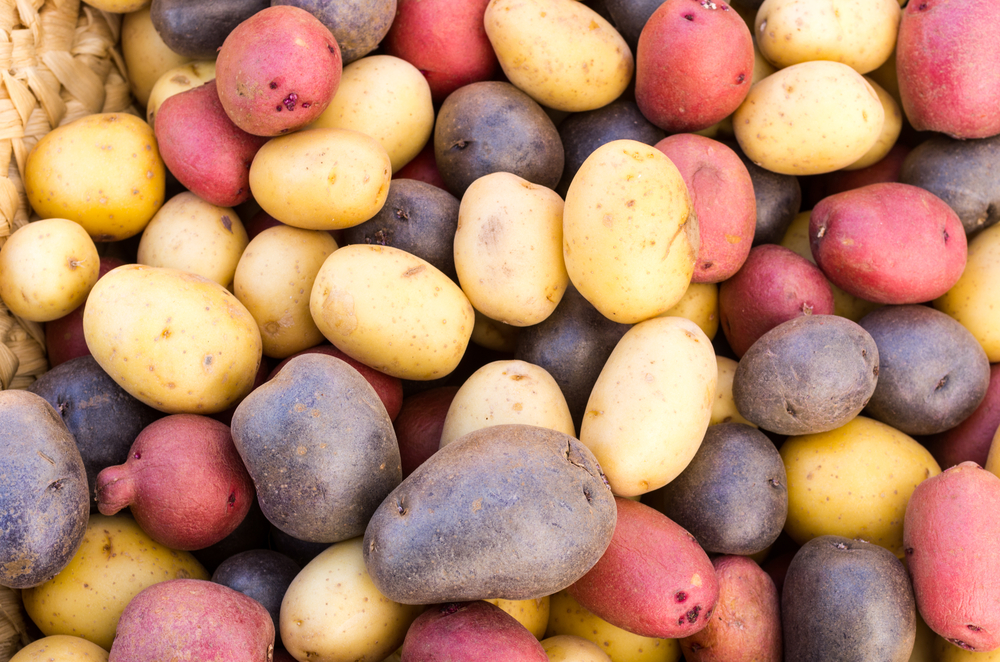
Potatoes plants are available in many different varieties and some are more disease resistant than others. Potatoes are pretty simple to grow but do require more space in the garden. Some gardeners have had success growing them in bags or containers but in ground or raised beds are more ideal. Potatoes are a great source of fiber, act as a prebiotic, are full of antioxidants, are low in sodium, and are cholesterol free. Our family loves potatoes and they are often a side dish on our table. There are tons of ways to cook them and lots of different varieties to try.
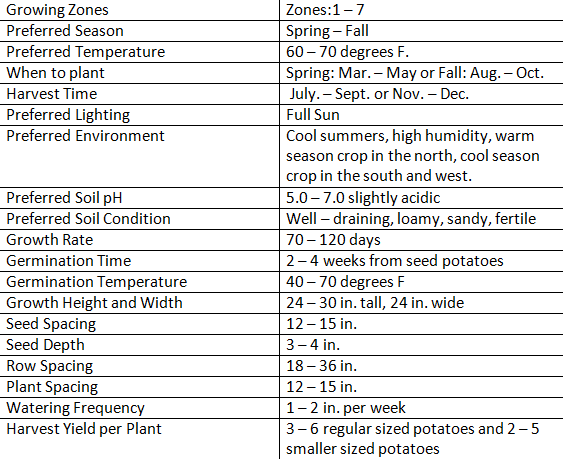
Cut your seed potatoes into pieces so that there is an eye or two on each piece. Plant your seed potatoes, when the weather is still cool, about 1 – 2 months before the last expected frost.
Soil should be moist, but not wet, or too compact. In mild winter climates, potatoes can be planted in winter anytime from Sept. – Feb. depending on the location. The soil should be well draining, cool, loamy, fertile, and not too hard or compact. Potatoes need a full sun spot and prefer to grow in rows of hills or mounds. Digging trenches and placing seed potato pieces every foot or so, is a common practice. Cover with 3 – 5 in. of soil. After, two weeks the potatoes should start to sprout and should be covered with more soil, so only a few inches of the plant are above the ground. This creates hills or mounds. Repeat this process about once a month. Once the potato plants are well emerged and on their way, mulch with straw or wood chips. Continue hilling as needed. Potato tubers should remain covered with soil and not be exposed to sunlight to avoid toxicity. Make sure to keep your potatoes well -watered. They need a good inch or two of water per week, consistently, to maintain tuber shape.
When the plants leaves start to die back stop watering them as much, to prepare them for harvest. Regular potatoes are harvested after the plants foliage dies completely. New potatoes are smaller and harvested about 2 weeks after the plants stop producing flowers. New potatoes are not curable, and should be eaten within a few days.
Two weeks before you plan to pull the potatoes, cut the brown foliage off to thicken the skins, and keep the soil as dry as possible. After a few weeks, check to see how ready the potatoes are for harvesting. They should have firm skins that do not rub off easily. If a hard frost is expected soon, go ahead, and harvest any remaining potatoes.
To dig up the potatoes, dig gently around the tubers to loosen the soil. Avoid damaging the tubers as this will cause rotting. Pull them up gently and let the potatoes air dry as much as possible. Avoid leaving the potatoes in the sun, as this increases their chance of producing solanine, which is toxic in high amounts and changes the potatoes flavor and color to green.
To cure the potatoes and get them ready for storage, store them in a dry, cool, dark place. After they are cured, brush off any excess dirt, but don’t wash them until you plant to eat them.
Store your potatoes longer term in an area that is well ventilated, cool, dark, and humid. Potatoes need to be stored at a temperature between 42 – 55 degrees F. Do not store the potatoes near onions or apples.
Common Diseases
Early/Late Blight appears as brownish black spots on the plants leaves. It can spread to the stems and it spreads quickly to the tubers creating rotten brown spots on the potatoes. To prevent it, cut out infested plant foliage when it first appears, and clean your tools in between cuttings. If more than a tenth of the plant is infected, you must pull the plants, and harvest any formed potatoes. Water in the morning and avoid getting foliage wet. Blight is common in hot and humid conditions. Choose disease resistant seed potatoes for planting and practice crop rotation.
Potato Scab is a common root vegetable disease that causes scabbing on the tubers or roots of plants. It is common when soil pH is incorrect. Potatoes in particular prefer acidic soil, around pH 5.0. Soil amendment and sulfur dusting of seed potatoes when planting can help prevent it.
Common Pests
Aphid nymphs and adults like to suck on plant juices, attack plant leaves, stems, buds, flowers, fruits, and the roots of many vegetable plants. To find them look for misshaped, curling, or yellowing leaves. Look for tiny eggs on the undersides of leaves. They can be one of many colors, such as, white, tan, red, yellow, brown, or black. They are tiny and usually cover large portions of the leaves and stems. To prevent them, you can plant companion plants such as herbs that may deter or distract them. You can try and knock them off by spraying the plants thoroughly with water. Neem oil, insect soaps, cayenne pepper spray, a dusting of flour, and Diatomaceous Earth are all effective against aphids.
Colorado potato beetles are a small beetle that has black strips down its body and little black spots on its head. They are tannish yellow to orange in color. Colorado potato beetles are present in every state and will lay eggs on leaves and eat foliage. To prevent them hand pick them at first sight, use organic pesticides that target them, or try and control them with diatomaceous earth during their nymph state.
Flea beetles are tiny beetles that create sporadic holes in the leaves. They can spread diseases like wilt and blight. To treat for flea beetles, you can use insecticidal soap, an early season insecticide, talcum powder, or sticky traps. All these options will reduce their numbers and damage.

0 Comments