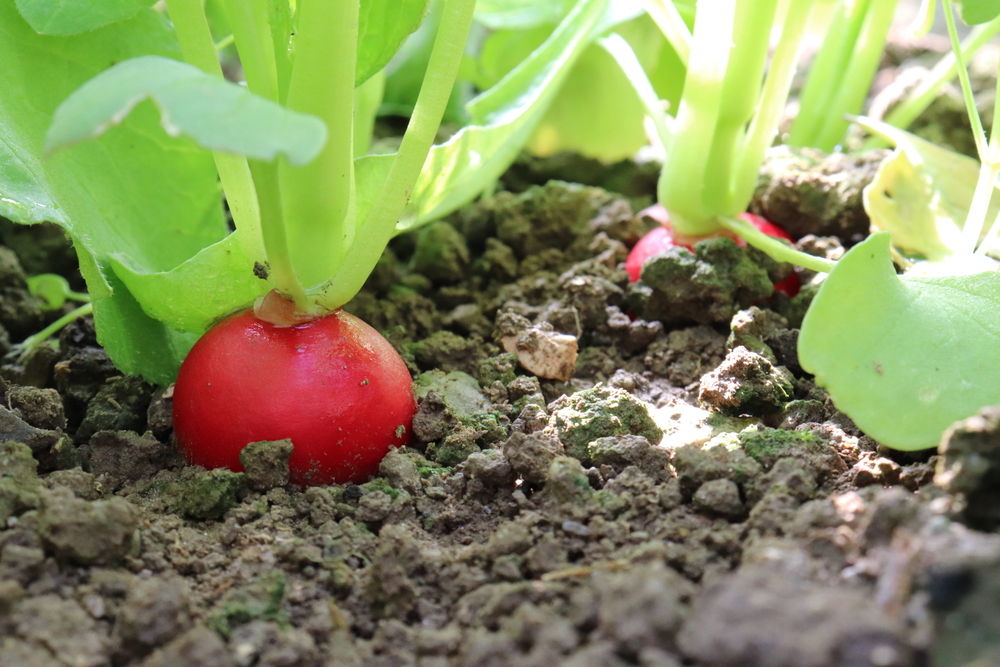
Radishes are a perfect option for a first time garden because they are very easy to grow and maintain. They are also super-fast, many growing to the point of harvest within a month! Radishes are very nutritious additions to salads, tacos, and casseroles. They can also be pickled and canned for a tasty snack. Radishes contain a good amount of antioxidants, vitamin C, potassium, iron, and many other valuable vitamins and minerals. I love the way they make my salads crunch!
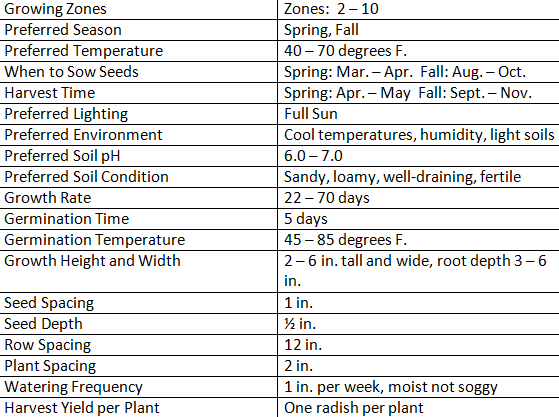
Find a nice sunny place to plant your radishes. They grow best in full sun. Choose a soil that is light and loamy, not too hard or compact. Add compost and/or fertilizer to improve the soil’s fertility. Ensure there are no rocks or dirt clumps in the soil, to prevent your radishes from growing in odd shapes.
In early spring, when it is warm enough outside, plant seeds directly into the garden. They will fare better if started outdoors. Every 10-14 days, plant more seeds for continuous harvesting throughout the season. For fall, plant seeds when the heat of the summer has passed up until about a month before the first expected frost.
When the radish seedlings reach a good size, move them farther apart, about two inches, to give them more room. Water consistently and regularly. Soil should remain moist but not waterlogged. Put mulch around the radishes, such as, straw or natural wood chips. This will keep moisture in and will prevent weeds and diseases from spreading.
Radishes are very fast growers and are usually ready for harvesting within three weeks to a month under the right conditions. When roots are a good inch in size, they are ready. Once mature harvest radishes immediately to avoid deterioration. Pull the radishes out gently and rinse the tops and roots off, drying thoroughly. Cut the radish greens off leaving about an inch of growth and cut the roots tail off. Wash thoroughly again and refrigerate. Store the radish greens in a separate air tight container with a damp wet paper towel.
Common Diseases
Alternaria blight causes brownish yellow circular spots to appear on foliage. It spreads commonly through crop debris so keep the garden area around your plants tidy. This type of blight is common in high heat and humid conditions. To prevent it, practice crop rotation, use disease free certified seeds, keep the garden weed free, and water at the plants base; not overhead.
Clubroot causes the plant roots to become mangled and misshapen. It is a fungal disease that causes the plants to quickly wilt and die. Remove any infected plants. Sterilize the soil and raise the pH to 7.2 to prevent the fungus from spreading to the other plants nearby.
Downy Mildew is caused from wet humid conditions. Overhead watering is also a cause. To prevent, water at the base of the plants, provide good air circulation and keep leaves as dry as possible. 1 part milk to 10 part water mix can help if it’s already started. Fungicides can help prevent it.
Fusarium wilt is a fungus that attacks the veins of plants leaves and causes drooping and death over time. It ca affect a variety of different vegetables, fruit, and herbs. It is soil bound and long lasting, so crop rotating will not help. Use of an organic fungicide can help prevent it, but once its present its hard to eliminate. Planting disease resistant varieties is the best solution.
White Rust appears as white spore patches on the undersides of the plants leaves and can affect a number of vegetable plant types. Treat with fungicide regularly to prevent and rotate crops. It can harbor overwinter.
Wirestem is a fungal disease that affects seedlings as they grow and causes the stems to appear wired. It is soil borne, so practice crop rotation often. It is common in a variety of vegetables. It is common in soils that are hard, compact, warm, and moist. Prevent it with organic fungicides.
Common Pests
Aphid nymphs and adults like to suck on plant juices, attack plant leaves, stems, buds, flowers, fruits, and the roots of many vegetable plants. To find them look for misshaped, curling, or yellowing leaves. Look for tiny eggs on the undersides of leaves. They can be one of many colors, such as, white, tan, red, yellow, brown, or black. They are tiny and usually cover large portions of the leaves and stems. To prevent them, you can plant companion plants such as herbs that may deter or distract them. You can try and knock them off by spraying the plants thoroughly with water. Neem oil, insect soaps, cayenne pepper spray, a dusting of flour, and Diatomaceous Earth are all effective against aphids.
Cabbage Loopers are small green caterpillars that feed on plants at night. If minor, handpick them off the plants leaves and stems. If consistently a problem, use Bacillus thuringiensis to treat for them. It is a natural pesticide that specifically targets a variety of caterpillars.
Cabbage Root Maggots feed heavily on roots and clump together in groups. They are small, white, legless maggots. It is the baby of a cabbage fly. Cabbage flies emerge in spring and lay eggs near the base of plant stems. Larvae hatch and burrow into the soil to feed on roots. After feeding, they mature into the pupae stage and turn a brownish red color. Soon cabbage root fly adults will emerge. Without treatment the plant will die. If and when you find eggs remove and destroy them. Check roots for maggots and remove with a heavy rinse of water before replanting in fresh soil. Sticky traps, predatory nematodes or wasps, can be effective preventatives.
Cutworms cut stems of plants off at their base and they love a new transplant. Coffee grounds, egg shells, and diatomaceous earth are helpful when spread around plant bases and stems. Bacillus thuringiensis or another natural insecticide can be used in extreme cases. You can hand pick them at night every few days to lower their numbers.
Flea Beetles are tiny beetles that create holes in the leaves that are sporadic. They can spread diseases like wilt and blight. To treat for flea beetles, you can use insecticidal soap, an early season insecticide, talcum powder, or sticky traps. All these options will reduce their numbers and damage.
Harlequin Bugs are black and orange, and look similar to ladybugs. They suck on plant sap and cut holes in foliage. They are members of the stink bug family. They will feast on a variety of fruit and vegetable plants. To prevent them, plant boundary crops that deter them, keep the garden weed free, try tight to the ground row covers, insecticidal soap, or organic pesticides.

0 Comments